
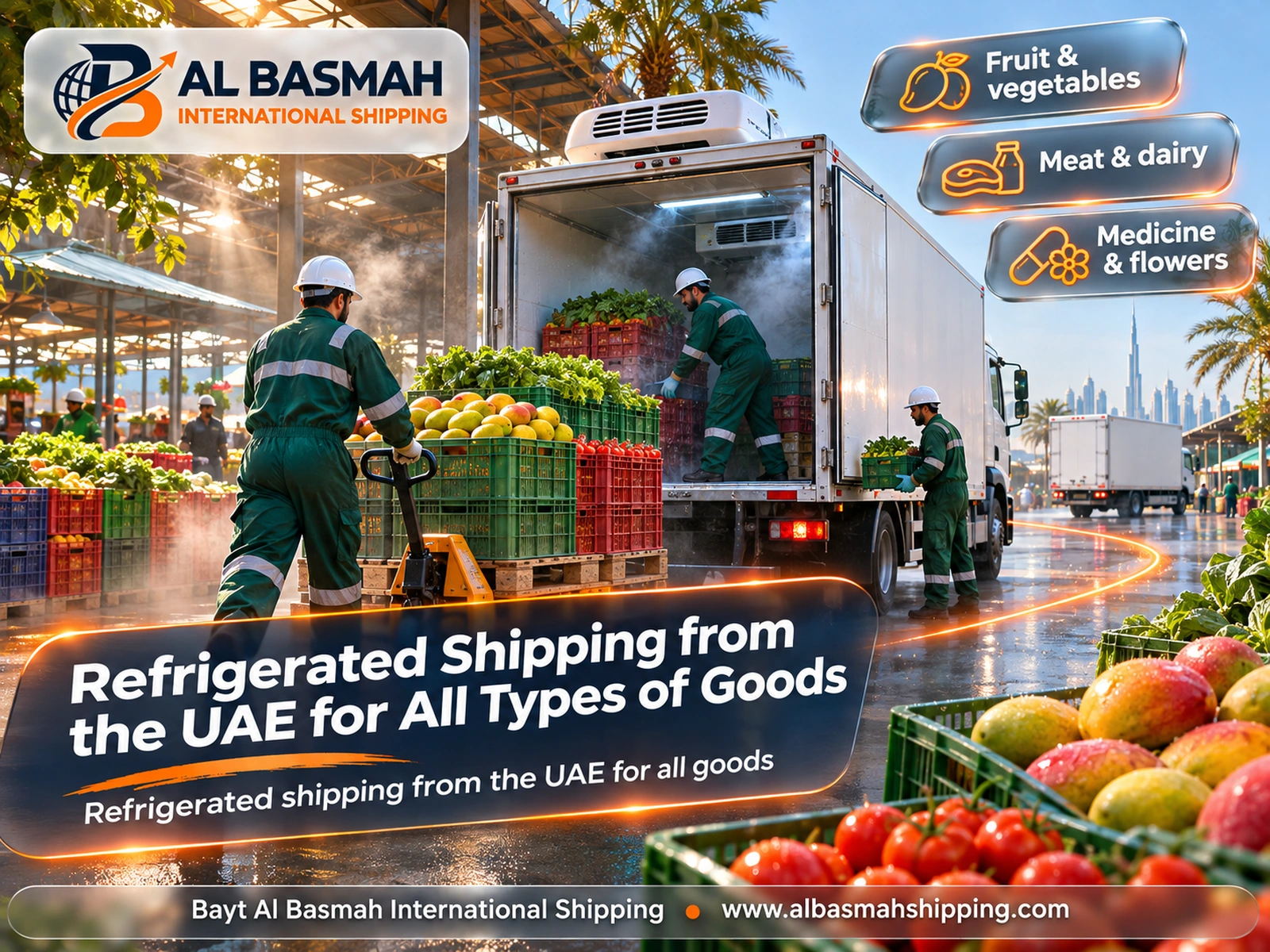
Every product has a temperature that keeps it, and two degrees off can separate a sound shipment from a rejected one. At Al Basmah International Shipping we provide refrigerated shipping from the UAE for vegetables, fruit, meat, fish, dairy, chocolate, ice cream, flowers, medicines and cosmetics: inside the country, by road to the Gulf, and to the rest of the world in reefer containers by sea, or by air when it is urgent. This guide gives the temperature and packing for each type of goods, and what must never share a body. Orders on WhatsApp +971557643821 at any time.
Stops in this guide13 sectionsShowHide
The right temperature for each product
- Frozen meat and fish: −18°C or colder; ice cream −20°C or colder.
- Fresh meat and fish: −1 to +2°C; dairy: 0 to +4°C.
- Refrigerated medicines: +2 to +8°C; chocolate: +12 to +18°C.
- Bananas, mangoes and lemons: +10 to +14°C, because hard cold damages them.
- Keep ethylene-producing fruit away from leafy greens and flowers, and fish away from dairy.
What is refrigerated shipping and who is it for?
Refrigerated shipping keeps goods at a temperature the owner sets, from the moment they leave the cold room until the customer receives them, whether the trip is an hour from Dubai to Sharjah or weeks at sea. It suits anyone handling products that change with heat: wholesalers, importers and exporters, farms and florists, food factories, pharmacies and medical distributors, restaurants and hotels, and online shops selling food or sensitive products.
If vehicle type and size are your main concern, see the guide to refrigerated transport in the UAE; if your goods are going abroad, read international refrigerated transport from the UAE too.
Temperature table for every type of goods
Figures are approximate, drawn from ranges used in chilled transport; the binding temperature is the one the producer or exporter sets. If the carton shows a different figure, we go by the carton.
| Goods | Approx. temperature | Packing note |
|---|---|---|
| Leafy greens, strawberries, grapes | 0 to +4°C | Vented cartons |
| Apples, onions, carrots | 0 to +4°C | Apples kept apart from leafy greens |
| Oranges and mandarins | +4 to +8°C | Ventilated crates |
| Tomatoes, cucumbers, peppers | +7 to +10°C | Not below +7°C or they are damaged |
| Potatoes | +6 to +10°C | Mesh sacks and ventilation |
| Bananas, mangoes, lemons | +10 to +14°C | Sensitive to hard cold |
| Fresh meat and poultry | −1 to +2°C | Vacuum packs or wrapped trays |
| Frozen meat and poultry | −18°C or colder | Lined cartons |
| Fresh fish | −1 to +2°C | Foam boxes with ice |
| Frozen fish and shrimp | −18°C or colder (−20°C for long trips) | Sealed boxes with protective glaze |
| Milk, yoghurt, soft cheese | 0 to +4°C | Sealed packs |
| Butter | 0 to +2°C, or frozen | Away from odours |
| Ice cream | −20°C or colder | Insulated cartons |
| Chocolate and sweets | +12 to +18°C | Avoid condensation |
| Cream cakes | 0 to +4°C | Rigid boxes |
| Cut flowers (roses, carnations) | +1 to +4°C | Cartons with sleeves |
| Tropical flowers (orchids, anthurium) | +12 to +15°C | Not as cold as roses |
| Refrigerated medicines and vaccines | +2 to +8°C | Insulated boxes and temperature indicators |
| Controlled room-temperature medicines | +15 to +25°C | Per the label |
| Cosmetics and perfumes | About +15 to +25°C | Per the maker’s instructions |
Goods-by-goods guide
Fruit and vegetables
Fresh produce keeps breathing after harvest, so it needs cooling and ventilation together. The classic mistake is treating all produce as one temperature: lettuce and strawberries want close to zero, while tomatoes, cucumbers, bananas and mangoes suffer chilling injury below their limit, showing watery spots or darkening days after delivery.
- Cool produce straight after harvest and before loading.
- Use vented cartons or plastic crates, and do not fully stretch-wrap a pallet that needs air.
- Stack crates so their vents line up and air can pass through.
- Fresh dates (rutab) ship chilled or frozen; dry dates may not need cooling on short runs.
Meat and poultry
Fresh meat travels close to zero, −1 to +2°C, the tightest range with the least room for error. Frozen meat needs −18°C or colder throughout and must never partly thaw and refreeze. Carcasses hang on hooks in trucks fitted for it; cuts go wrapped in cartons on pallets. Raw meat stays separate from anything ready to eat.
Fish and seafood

Fresh fish is packed in foam boxes with crushed ice, with drain holes so melt-water does not pool at the bottom. Frozen fish and shrimp ship at −18°C or colder, ideally −20°C on long sea voyages. Fish odour travels easily, so it never shares a body with dairy, fruit or chocolate.
Dairy and cheese

Milk, yoghurt, labneh and soft cheeses travel at 0 to +4°C. Hard cheeses are more forgiving but absorb odours quickly. Butter ships chilled at 0 to +2°C, or frozen on long trips. Make sure packs are sealed and cartons can take moisture.
Chocolate and sweets
Chocolate dislikes both hard cold and heat: above +20°C it softens and loses shape, and below +10°C water can condense on it when it comes out, leaving a white bloom on the surface. The right range is +12 to +18°C, and above all the temperature should not jump at delivery. Middle Eastern sweets, maamoul and dry cakes are handled much the same way; cream desserts need 0 to +4°C.
Ice cream and frozen desserts
Ice cream ships at −20°C or colder, in insulated cartons, in a body pre-cooled long enough. Even a slight thaw changes its texture and forms ice crystals inside, and refreezing cannot undo that.
Bakery
Ordinary bread does not need cooling on short runs, but frozen dough and part-baked pastries travel at −18°C, and pastries filled with cream or cheese need 0 to +4°C.
Flowers and plants
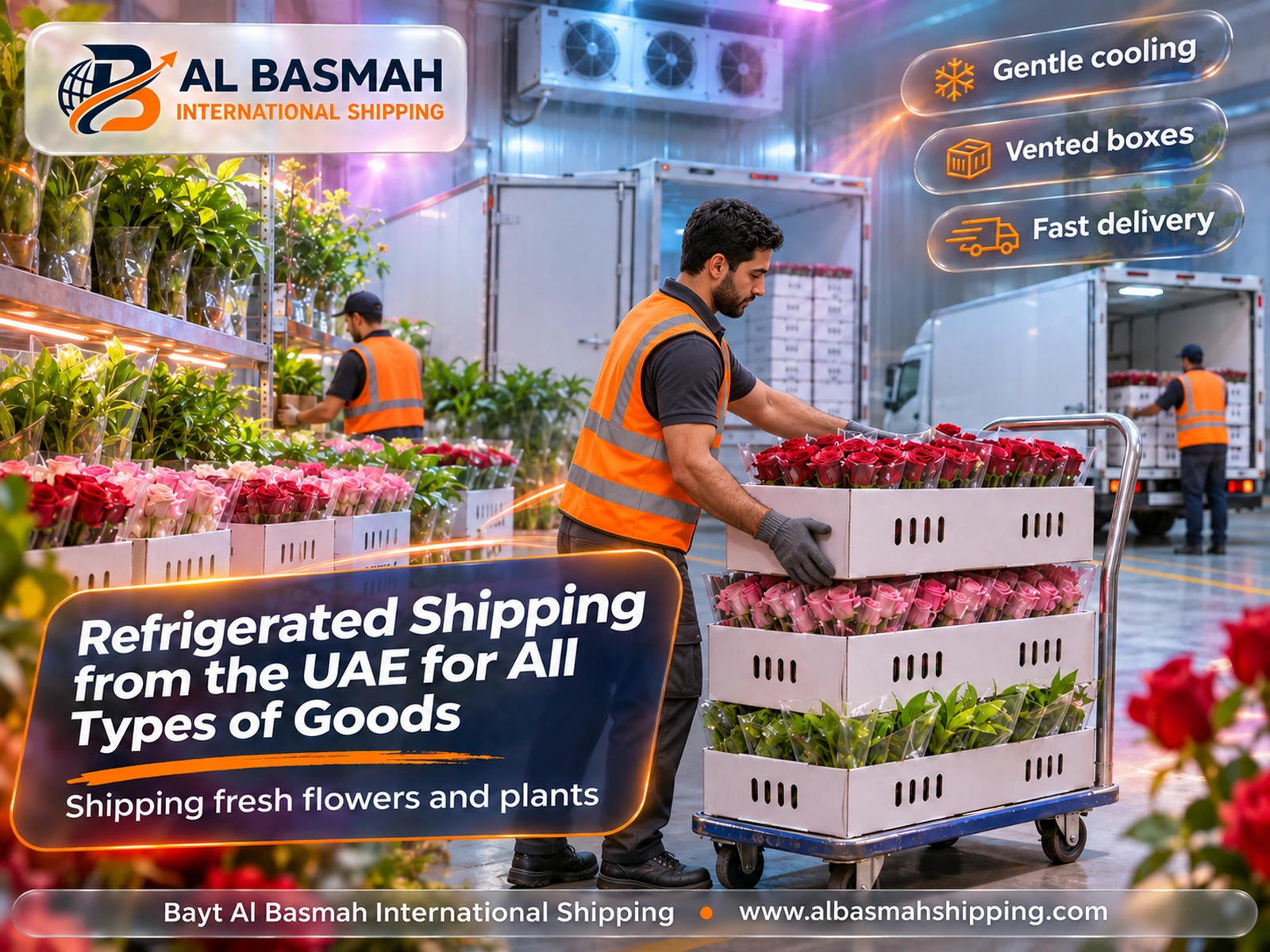
Roses, carnations and chrysanthemums ship at +1 to +4°C with high humidity, in vented cartons after pre-cooling. Tropical flowers such as orchids and anthurium are damaged by that cold and need +12 to +15°C. Potted plants vary by species, and most prefer moderate temperatures with airflow. The key rule: never ship flowers with ethylene-producing fruit, which makes petals drop and blooms wilt fast.
Medicines and medical supplies
Refrigerated medicines such as insulin and many vaccines need +2 to +8°C and cannot tolerate freezing at all. Other medicines are labelled “store below 25°C” and need controlled transport at +15 to +25°C in summer. Medicines are packed in insulated boxes with conditioned cool packs and placed away from the truck’s cold-air outlet. The driver can send a photo of the temperature reading at pickup and delivery when you ask.
Cosmetics and certain chemicals
Creams, perfumes and some personal-care products spoil in summer heat, separating or changing scent, so they travel in a chilled body at a moderate setting. Some chemicals and lab materials require cool storage under their safety data sheet; send us the sheet before booking so we can check whether and how they can be carried.
Mixed loads and goods that must not travel together
Combining products in one body saves money, but only works when they share a temperature and do not harm each other. There are two main reasons to separate:
- Ethylene gas: released by bananas, apples, mangoes, avocados, tomatoes and melons, it speeds ripening and wilting nearby. Leafy greens, cucumbers, broccoli, carrots and flowers are most affected.
- Odours: fish, onions, garlic and citrus give off smells that dairy, cheese, butter, chocolate and meat absorb.
| Do not combine | With | Why |
|---|---|---|
| Bananas, apples, mangoes | Leafy greens and flowers | Ethylene wilts and yellows them |
| Fish | Dairy, fruit, chocolate | Odour |
| Onions and garlic | Apples, cheese, butter | Odour |
| Frozen (−18°C) | Chilled (+4°C) | Two different temperatures; needs two compartments or two vehicles |
| Medicines | Raw food | Hygiene and separation requirements |
| Bananas (+13°C) | Strawberries (0 to +4°C) | No shared temperature |
Warning: Tell us everything in the shipment, even a small line. One carton of bananas in a load of flowers can ruin the whole consignment before it arrives.
Refrigerated vehicles and containers
| Option | Best for |
|---|---|
| Chiller van | Small city loads: restaurants, pharmacies, florists, dessert shops |
| Medium truck 3–5 t | Multi-drop distribution between emirates |
| Large truck 7–10 t | Wholesale and warehouse loads |
| Reefer trailer | Full loads inside the country or to Saudi Arabia, Oman, Qatar, Kuwait and Bahrain |
| 20 ft reefer container | Heavy, compact loads such as frozen meat and fish |
| 40 ft reefer container | Bulky loads such as fruit and vegetables |
| Insulated air-freight boxes | Medicines, flowers, premium seafood, samples |
How the cold chain stays intact
- Goods cooled before loading: a reefer holds temperature; it does not pull down a warm load fast.
- Body or container pre-cooled to the setting before the doors open.
- Quick loading straight from cold room to vehicle.
- Internal airflow: pallets under the goods, gaps from walls and roof, and no stacking above the load line in containers.
- Doors shut until delivery.
- WhatsApp messages from the team at every stage, and a temperature photo on request.
Refrigerated shipping from the UAE by road and sea
By road inside the UAE and to the Gulf
Inside the UAE most runs finish the same day; routes and timings are in the guide to refrigerated shipping within the UAE. For the Gulf we run reefer trucks and trailers to Saudi Arabia, Oman, Qatar, Kuwait and Bahrain, allowing for border clearance time when planning how long the goods stay cold. For the Kingdom specifically, see UAE to Saudi Arabia route guide.
By sea in reefer containers

For distant countries we book a 20 ft or 40 ft reefer container from Jebel Ali or Khalifa Port. The container holds one set temperature for the whole voyage, with a ventilation setting for fruit and vegetables that need fresh air exchange, closed for frozen cargo. It is inspected and pre-cooled before reaching the loading site, and goods are stacked on pallets below the red load line painted inside so cold air can circulate. This is the most economical option for large loads of frozen goods and fruit.
Chilled air freight for urgent goods
Some goods have a shorter life than a sea voyage: flowers, premium fresh fish, strawberries and berries, urgent medicines and lab samples. These fly. We collect them in a chiller vehicle and take them to the airport cargo terminal, where they are packed in insulated boxes with gel packs for chilled or dry ice for frozen, and labelled with temperature instructions. Air freight is charged on actual or volume weight, whichever is greater, so it suits small and medium quantities of high value.
Documents for exporting refrigerated goods
- Commercial invoice with the value and description.
- Packing list with carton counts and weights.
- Certificate of origin.
- Health certificate for food from the competent authority, and a phytosanitary certificate for flowers, plants and farm produce where needed.
- Import permit at the destination if required.
Requirements vary by country and by product, and our team checks them before loading so the shipment is not held on arrival.
Steps to ship your refrigerated goods
- WhatsApp +971557643821 with the goods, temperature, quantity, pickup point and destination.
- We choose the mode, truck, container or air, and tell you what can be combined and what must be separated.
- You receive the price and the list of documents needed.
- The vehicle or container arrives pre-cooled and loading takes place.
- The team messages you at each stage through to delivery.
You can also send your request from the quote page.
Common mistakes when shipping refrigerated goods
- Setting all fruit to one temperature, so bananas and mangoes suffer chilling damage.
- Fully wrapping produce pallets so they suffocate and sweat.
- Leaving out a small line in the shipment that does not match the rest.
- Leaving health certificates until the container reaches port.
- Choosing sea freight for goods whose shelf life is shorter than the voyage.
Refrigerated shipping prices from the UAE and what sets them
Our chilled service starts from AED 275 for a chiller van within a single city, per trip or day. Trucks between emirates, road freight to the Gulf, reefer containers and air freight are all priced on the goods and the destination: message the details on WhatsApp and the price comes back to you. To compare options by budget, see the guide to refrigerated shipping at competitive prices.
| Factor | Effect |
|---|---|
| Vehicle or container size | Van, truck or trailer; 20 ft or 40 ft container |
| Temperature | Deep frozen costs more than chilled |
| Distance and destination | Inside the UAE, Gulf by road, or international |
| Number of drops | Each delivery point adds time |
| Waiting time | At loading, delivery or the border |
| Part-load or full load | Part-loads save money on small, compatible quantities |
| Loading and unloading | Labour or a forklift |
| Documents | Health certificates and permits by destination |
FAQ: refrigerated shipping for all types of goods
Can vegetables and fruit share one container?
Yes, if their temperatures match and the load does not mix an ethylene producer with a sensitive product. We review the list with you before booking and suggest separating where needed.
What temperature is right for frozen meat?
−18°C or colder throughout, ideally −20°C on long sea voyages.
Do you ship flowers?
Yes: roses and carnations at +1 to +4°C, tropical flowers at +12 to +15°C, always away from fruit.
Do you carry refrigerated medicines?
Yes, at +2 to +8°C in insulated boxes, with a temperature photo at pickup and delivery if you ask.
How is chocolate shipped in summer?
At +12 to +18°C in a chilled body, avoiding sudden temperature changes at delivery so water does not condense on it.
How do I choose between sea and air?
By shelf life, quantity and value: large, longer-life loads go by sea; small, fast-perishing or urgent goods go by air.
Which documents are needed for export?
A commercial invoice, packing list, certificate of origin and a health certificate for food, plus an import permit where required; our team checks them for each destination.
Are the goods insured?
Ask the team about optional insurance before shipping; they will explain the options available.
Have chilled goods and need the right temperature and mode?
Send the type, quantity and destination on WhatsApp, and we will suggest the temperature, the mode and the price.
Tags: refrigerated shipping from the UAE, refrigerated shipping for all goods, chilled fruit and vegetable shipping, frozen meat shipping, frozen fish shipping, dairy and cheese shipping, chocolate shipping, ice cream shipping, flower shipping from the UAE, refrigerated medicine shipping, reefer container Jebel Ali, chilled air freight, reefer temperature guide, ethylene, cold chain, refrigerated shipping to Saudi Arabia, Al Basmah International Shipping