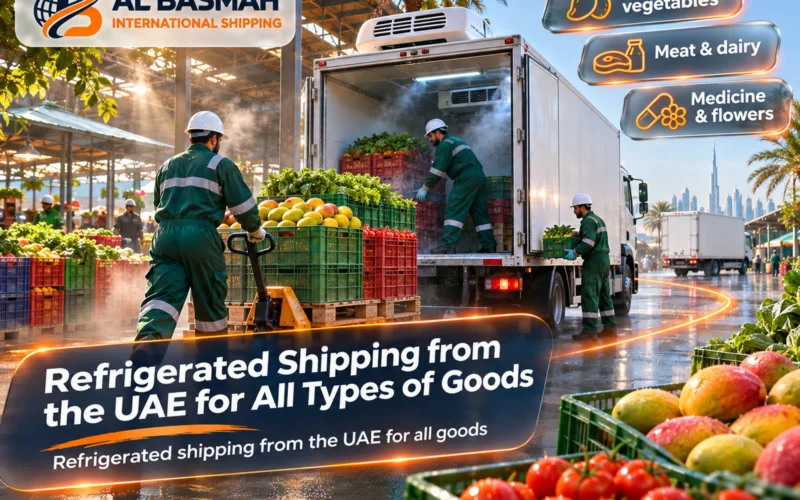
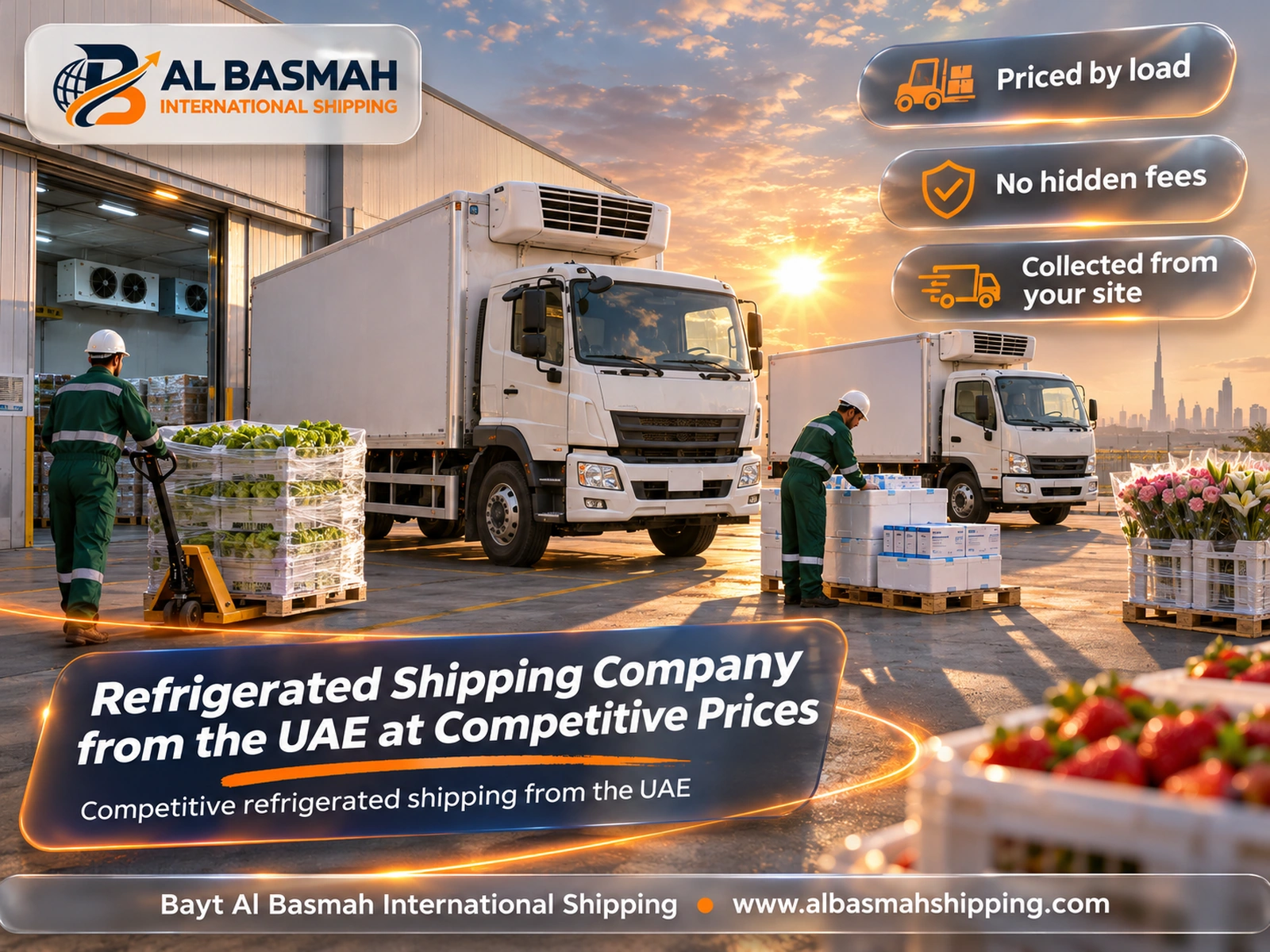
A competitive price in refrigerated shipping is not the lowest number on the market; it is paying for the space, temperature and distance you actually need without losing the goods. At Al Basmah International Shipping a chiller van inside one city starts from AED 275 per trip or per day, while larger trucks and runs between emirates or abroad are priced once you send the details on WhatsApp +971557643821. You can choose a part-load, sharing space with other shipments at the same temperature, or a full truck to yourself, depending on your volume.
Stops in this guide16 sectionsShowHide
How to save on chilled freight
- Book a vehicle that fits your volume: do not pay for a trailer to move ten cartons.
- Small volumes usually cost less on a part-load with goods that need the same temperature.
- Repeat shipments benefit from a regular arrangement with fixed slots.
- Have goods ready before the vehicle arrives so you do not pay waiting time.
- Never save on pre-cooling or packing; one spoiled load wipes out every saving.
Where do refrigerated shipping prices from the UAE start?
The starting point is a small chiller van inside a single city, from AED 275 per trip or per day. That suits orders for restaurants, pharmacies and shops and everyday delivery volumes. Once the volume grows or the distance stretches, the sums change: a medium truck from Dubai to Abu Dhabi, a reefer trailer from Sharjah to Riyadh or a reefer container from Jebel Ali are all priced on the details, because the gap between one run and another can be wide.
Why not publish a fixed rate card for every route? Because two loads of the same weight can cost differently: one is produce at +4°C with a single drop, the other is ice cream at −18°C with five drops. Send the details on WhatsApp and the price comes back to you, usually quickly when the information is complete.
What is refrigerated shipping, and who needs it?
Refrigerated shipping means carrying goods in an insulated body with a cooling unit that holds a set temperature for the whole journey, 0 to +8°C for chilled and down to −18°C for frozen. Anyone handling goods that lose value when they warm up needs it: produce, meat and fish suppliers, dairy and confectionery makers, restaurants, hotels and caterers, pharmacies and medical-supply distributors, florists and cosmetics traders. The service as a whole is described in the guide to refrigerated transport in the UAE.
Why does price matter more here than in ordinary freight? Because chilled loads are usually booked again and again, daily or weekly, and a small difference per run multiplies over a month. A trader sending three runs a week sees the effect of the right vehicle choice or of combined orders on the invoice far sooner than someone who ships once a year.
What decides the price of refrigerated shipping?
Eight factors make up the final price, and knowing them shows you which ones you can control:
| Factor | How it moves the price | What you control |
|---|---|---|
| Vehicle size | Each size up means higher running cost | Give the real pallet or carton count |
| Temperature | Frozen uses more energy than chilled | Do not ask for colder than the product needs |
| Distance | Inter-emirate or cross-border runs are longer | Group loads heading to the same area |
| Number of stops | Each extra stop is time and a door opening | Order addresses by location before booking |
| Waiting time | Hours standing at a dock are charged | Have goods and papers ready on time |
| Part-load or full truck | Sharing cuts cost for small volumes | Pick the option that fits your volume |
| Loading and unloading | Labour or a forklift adds cost | Provide a forklift or staff at your site if you can |
| Documents | Exports add paperwork and clearance | Prepare the invoice and certificates early |
Part-load or full truck: which suits you?
The simple rule: if your goods fill less than half the vehicle and you can accept a slightly flexible slot, a part-load is usually cheaper. If the volume is large, the goods very sensitive or the delivery tied to an exact hour, a full truck is the better buy even if it looks dearer.
When to choose a chilled part-load
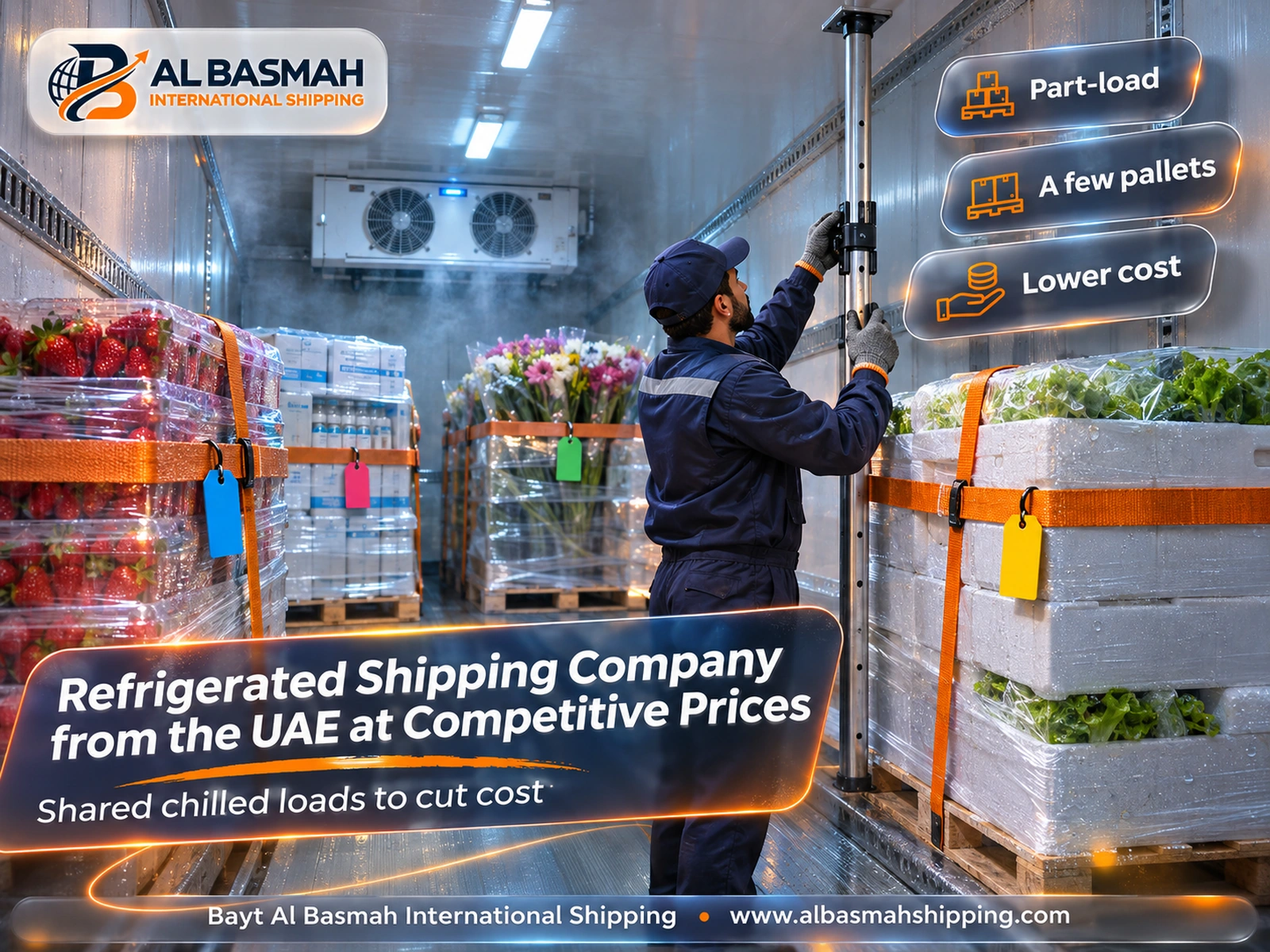
On a part-load you pay for the share of the body your goods take up, travelling alongside other consignments in the same temperature band and heading the same way. It suits a trader sending two or three pallets a week, or a shop receiving a small quantity from a supplier in another emirate.
- The benefit: lower cost per pallet or carton.
- The condition: your goods must match the rest of the load in temperature and odour; fish never travels with cheese, for example.
- The flexibility: the slot may move a little until the load is complete.
- The packing: goods must be well wrapped and labelled because they share space.
When you need a full reefer truck
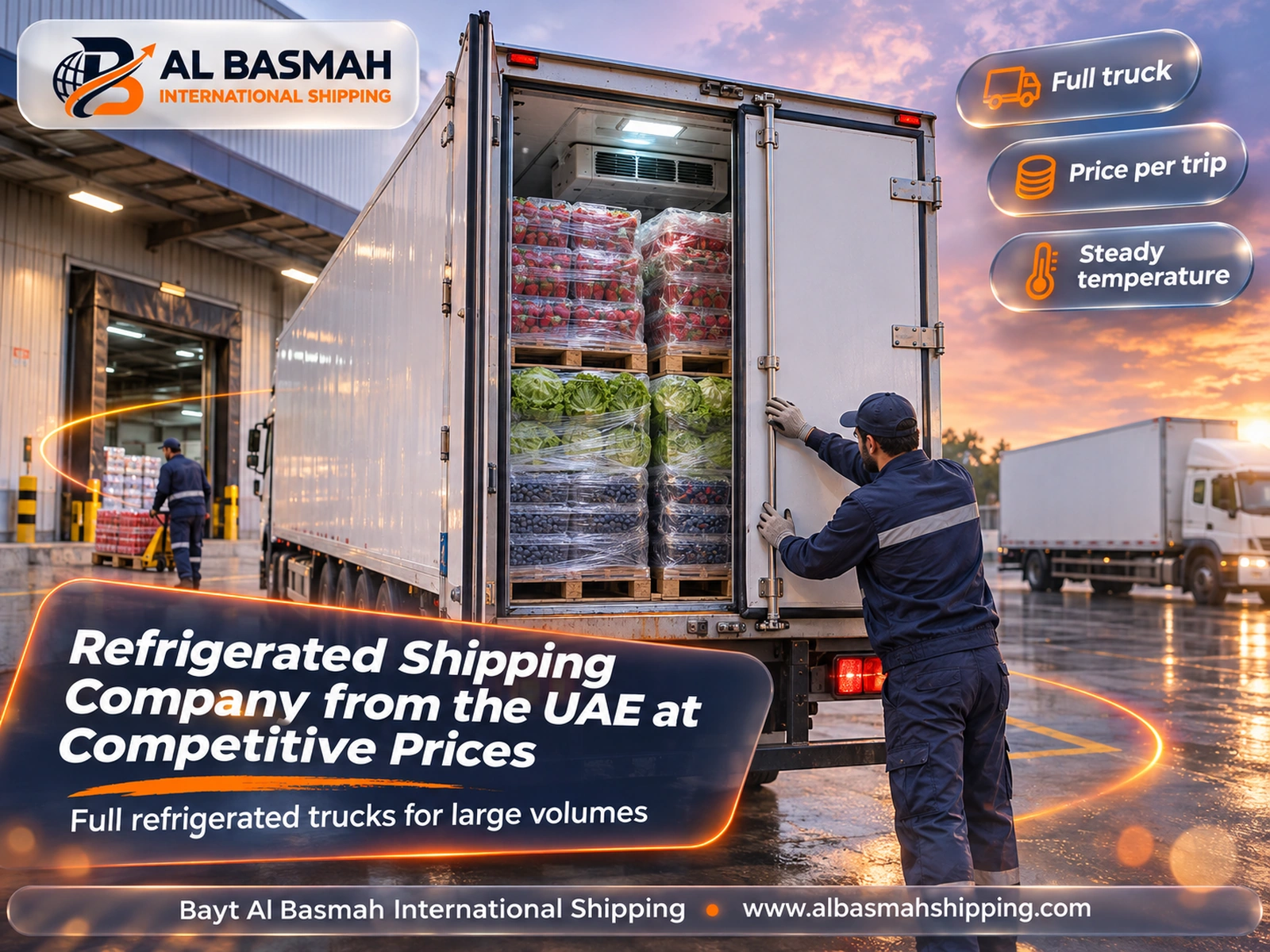
A full truck is yours from loading to delivery, at your temperature and on your schedule. It is the right choice for large volumes, for goods that must not mix such as medicines or deep-frozen items, and for deliveries tied to a fixed moment like a branch opening or an event.
| Comparison | Part-load | Full truck |
|---|---|---|
| Cost per unit | Lower | Higher for small volumes, cheaper for large ones |
| Timing | Flexible, depends on the load filling | Fixed as you set it |
| Temperature | A band shared with other shipments | Exactly your setting |
| Door openings en route | May open for other drops | Opens only at your address |
| Best for | A few pallets, relaxed timing | Large volumes, sensitive goods, fixed times |
Refrigerated vehicle types and their relative cost
Every vehicle has an economic load size; loading far less than that means paying for empty cold air:
| Vehicle | Volume where it pays off | Cost level |
|---|---|---|
| Small chiller van | A few cartons up to about 1 tonne | Lowest; from AED 275 inside a city |
| Medium reefer truck | About 3 to 7 tonnes or several pallets | Medium, by distance and stops |
| Reefer trailer | A full load up to roughly 20 pallets | Higher per trip, lower per pallet |
| 20/40 ft reefer container | Large export volumes by sea | Cheapest per tonne over long distances |
Temperature ranges and how they affect cost
The product decides the temperature, not the budget. Still, it helps to know that asking for colder than needed raises cost for nothing, while asking for warmer than needed can cost you the whole load. These are common approximate ranges, and the shipper confirms them:
| Goods | Approximate range | Effect on price |
|---|---|---|
| Fruit and vegetables | 0 to +8°C by item | Standard chilled; can go on a part-load |
| Chilled meat and poultry | 0 to +4°C | Standard chilled with prompt delivery |
| Frozen meat and fish | −18°C | Freezing raises the cost |
| Fresh fish and seafood | Near 0°C | Kept apart from other items for odour and liquids |
| Dairy and cheese | About +2 to +6°C | Fits a part-load with other chilled food |
| Chocolate and sweets | Light cooling, per manufacturer | Does not need hard chilling, so do not pay for it |
| Ice cream | −18°C or colder | Among the costliest because it is so sensitive |
| Bakery | Chilled or frozen by type | Frozen dough at frozen rates |
| Flowers and plants | About +2 to +6°C | Usually small, fast shipments |
| Medicines and medical supplies | +2 to +8°C | Best on a dedicated vehicle |
| Cosmetics and some chemicals | Per product data sheet | Kept apart from food |
The benefits of a regular contract for repeat shipments
If you send chilled goods every day or every week, booking run by run wastes time and money. A regular arrangement means the team already knows your goods, addresses and timing:
An agreed rate
You know each run’s cost in advance instead of asking every time, which makes your margins easier to plan.
Fixed slots
The vehicle arrives at the same hour, so your warehouse stages the goods beforehand with no waiting.
Better route planning
Knowing the addresses ahead allows a shorter round with fewer door openings.
Faster contact
A short WhatsApp message is enough to change a quantity or add an address.
Send your repeat-shipment details through the quote request form or on WhatsApp, and the team will come back with the terms.
Ways to cut cost without risking the cold chain
- Combine orders: three small loads to the same area on one day cost less than three separate runs.
- Order stops by geography: send addresses in a logical sequence so the vehicle does not double back.
- Use pallets: forklift loading is faster than loose cartons, and saved time becomes a lower price.
- Be ready before the slot: goods at the dock, papers printed, receiver informed.
- Choose the right temperature: do not book −18°C for goods that are fine at +4°C.
- Plan long runs early: booking a day or two ahead lets us add you to a part-load heading the same way.
- Match the mode to the distance: sea for far countries and big volumes, air only when it is urgent.
Warning: Some things are never worth cutting: pre-cooling the body before loading, proper packing, and keeping chilled and frozen apart. One load of meat spoiled on the road costs more than months of savings on freight.
How we keep it cold whatever the price
A lower price does not mean fewer steps. On every run, small or large:
- The body is pre-cooled to the required temperature before loading.
- Loading is quick and the doors are not left open.
- Pallets are stacked so air circulates and the cold-air outlet stays clear.
- Doors stay shut on the road except at delivery.
- The driver can share a temperature reading at pickup and delivery on request.
- The team sends you a WhatsApp update at each stage.
Booking steps for the best price
The more complete your first message, the more accurate the price and the faster the reply:
- Type of goods and required temperature.
- Quantity: pallets or cartons and a rough weight.
- Pickup address and the delivery address or addresses.
- The slot you want and whether it is flexible.
- Whether it is a one-off or a repeat shipment.
- Whether you need labour for loading or unloading.
- For exports: the country, city and the documents you already hold.
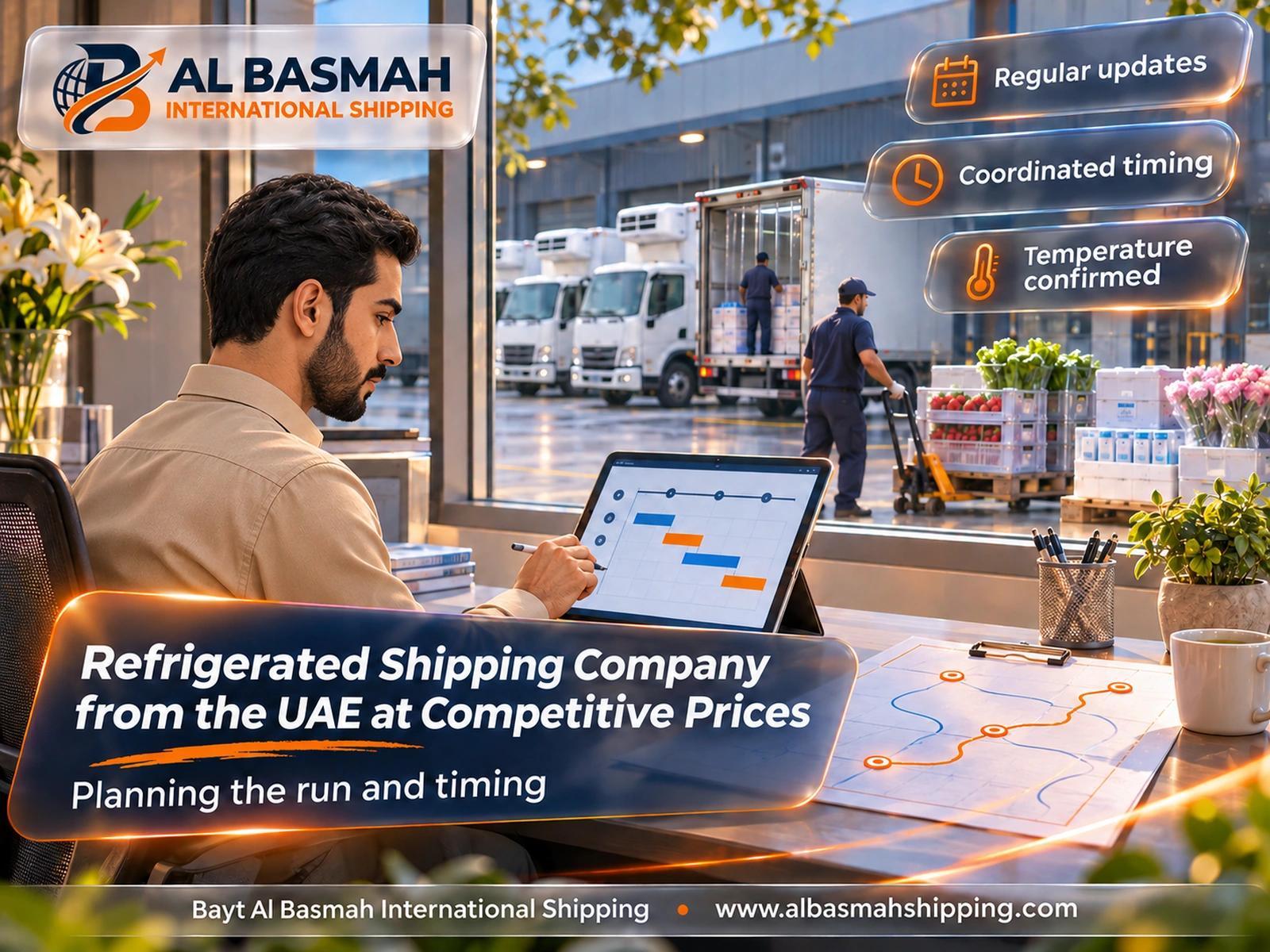
Send these points on WhatsApp +971557643821 and the team will propose the cheapest sound option: part-load or full, the right vehicle, and the slot.
Preparing goods in a way that saves money
Good packing saves space, shortens loading and protects the goods, and all of that shows in the price:
- Sturdy cartons of one size stack fast and fill the space with no gaps.
- Stretch-wrapped pallets with the pallet openings left clear for air.
- A label on each pallet with the receiver and temperature prevents errors on multi-drop rounds.
- Sealed packs for meat and fish stop leaks damaging other people’s goods on a part-load.
Mistakes that raise the bill or spoil the load
- Booking a bigger vehicle than needed “just in case”.
- Under-stating the volume, so the vehicle that arrives is too small and a second run is needed.
- Late staging of goods, so waiting time piles up.
- Adding addresses at the last minute without telling the team.
- Loading goods that have not yet reached their temperature in the cold room.
- Forgetting export documents, leaving the truck waiting at the border.
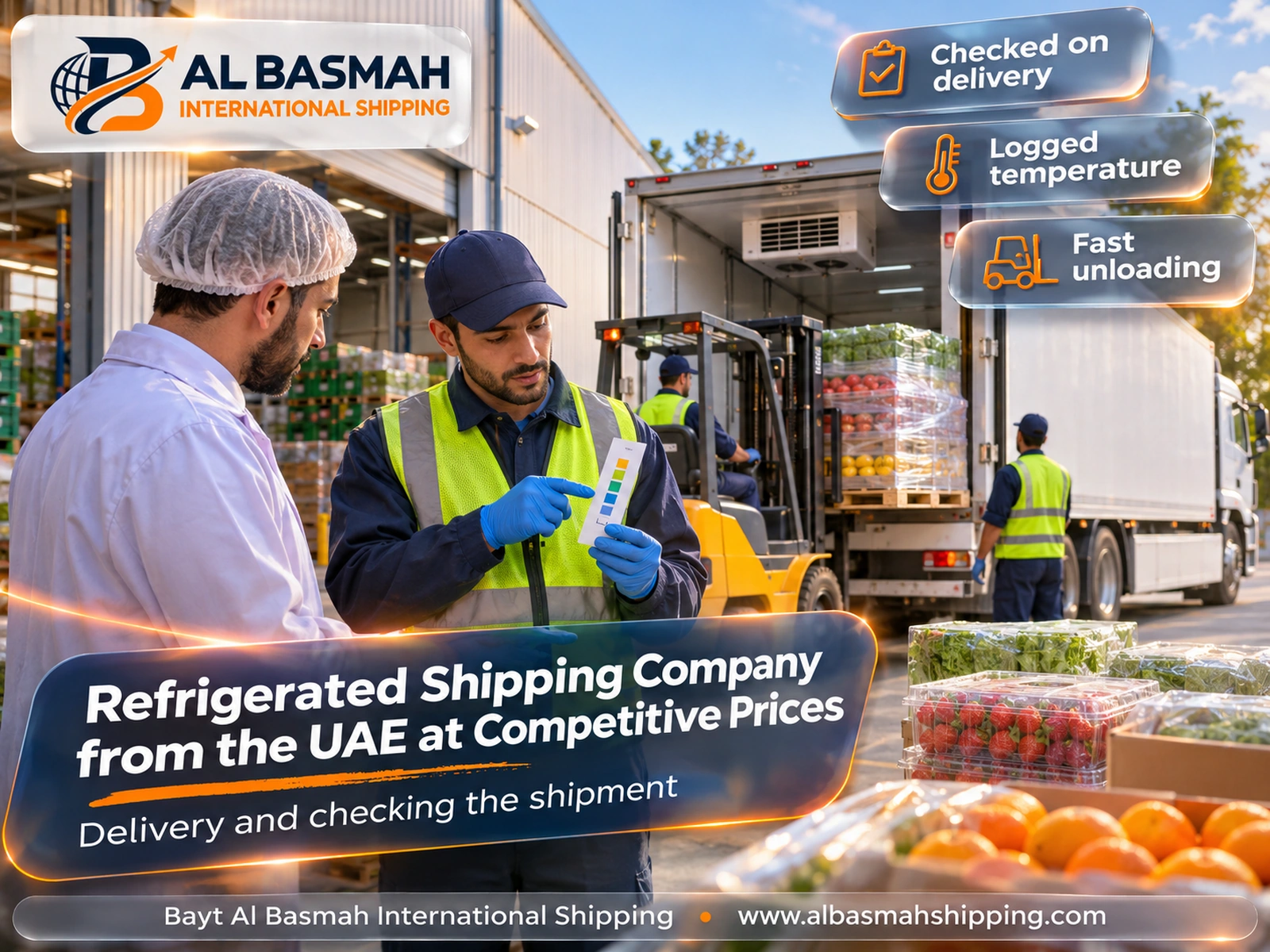
At delivery, check the temperature and the state of the cartons before you sign; that is the last chance to note anything.
Where we ship at competitive prices
Inside the country we run chilled between Dubai, Sharjah, Ajman, Abu Dhabi, Al Ain, Ras Al Khaimah, Fujairah and Umm Al Quwain; details are in the guide to refrigerated shipping within the UAE, and for Dubai-based businesses there is the guide to refrigerated transport in Dubai.
Beyond the UAE we send reefer trucks by road to Saudi Arabia, Oman, Qatar, Kuwait and Bahrain, and 20 ft and 40 ft reefer containers by sea from Jebel Ali or Khalifa Port to farther countries. Exports need a commercial invoice, a packing list, a certificate of origin and a health certificate for food from the competent authority, plus any import permits the destination requires; the team checks each destination’s rules. For the goods we carry and their temperatures, see the guide to refrigerated shipping for all goods.
When does the cheapest option turn out the dearest?
More often than people think. A supplier picks a smaller vehicle to save, so the driver stacks cartons to the roof, air stops moving and the top layer warms up. A trader sends fresh fish on a part-load with cheese to split the cost, and the cheese arrives smelling of fish and is refused. A restaurant owner leaves booking until the same morning and can only get a vehicle bigger than he needs. Each time, the lowest figure at the start became the highest at the end.
So we always suggest the option that protects the goods first, then the cheapest of the safe options, and we explain why if we think your request needs adjusting.
Chilled air freight: when is it worth the cost?
Chilled air freight is the dearest option, but it becomes the cheapest when the alternative is losing the goods. It earns its cost in three cases: goods with a life of a few days such as fresh fish and flowers, small high-value quantities such as medicines and samples, and deadlines that cannot wait for road or sea.
- We collect in a chilled vehicle and hand the goods to air cargo packed with gel packs or dry ice to suit them.
- Air charges go by actual or volumetric weight, whichever is greater, so compact packing saves money.
- If the volume is large and the goods can take a few extra days, a reefer container by sea costs far less.
You can also ask the team about optional insurance, especially for high-value loads.
Frequently asked questions about refrigerated shipping prices
What is your lowest price for chilled shipping?
A small chiller van inside one city starts from AED 275 per trip or per day. Larger or longer runs are priced on the details, so send them on WhatsApp and the price comes back to you.
Is a part-load safe for my goods?
Yes, as long as they match the rest of the load in temperature and are not affected by other goods’ odour or liquids. We do not combine incompatible items, and we ask that your goods are well wrapped and labelled.
When is a full truck cheaper than a part-load?
When your volume nears half the vehicle or more, or when you need a special temperature or an immovable slot. At that point the per-pallet cost of a full truck comes close to a part-load, with full control.
Do prices differ for repeat shipments?
Regular loads are set up as an arrangement with fixed slots and an agreed rate per run, which makes planning easier and cuts wasted time. Send your frequency and the team will come back with terms.
Why does frozen cost more than chilled?
Holding −18°C needs harder work from the unit, faster loading and more care at every door opening, so running costs are higher.
Is waiting time charged?
Long waits at the dock or the delivery site are charged, which is why we advise staging goods and papers and telling the receiver before the vehicle arrives.
Does the price include export documents?
Preparing and clearing export documents is added according to the destination. The team explains what each country needs, including the health certificate for food and import permits where required.
How do I get a price quickly?
Send the goods, temperature, quantity, addresses and timing on WhatsApp +971557643821. Orders are received around the clock, and a complete message means a more accurate price.
Want a price that fits your load?
Send the volume, temperature and addresses, and the team will suggest a part-load or a full truck.
Tags: refrigerated shipping company from the UAE, refrigerated shipping prices, chiller van price, reefer truck price, chilled part-load, full reefer truck, cheap refrigerated shipping UAE, cold chain transport cost, frozen freight UAE, inter-emirate chilled transport, reefer to Saudi Arabia, reefer container Jebel Ali, chilled air freight, regular refrigerated contract, Al Basmah International Shipping