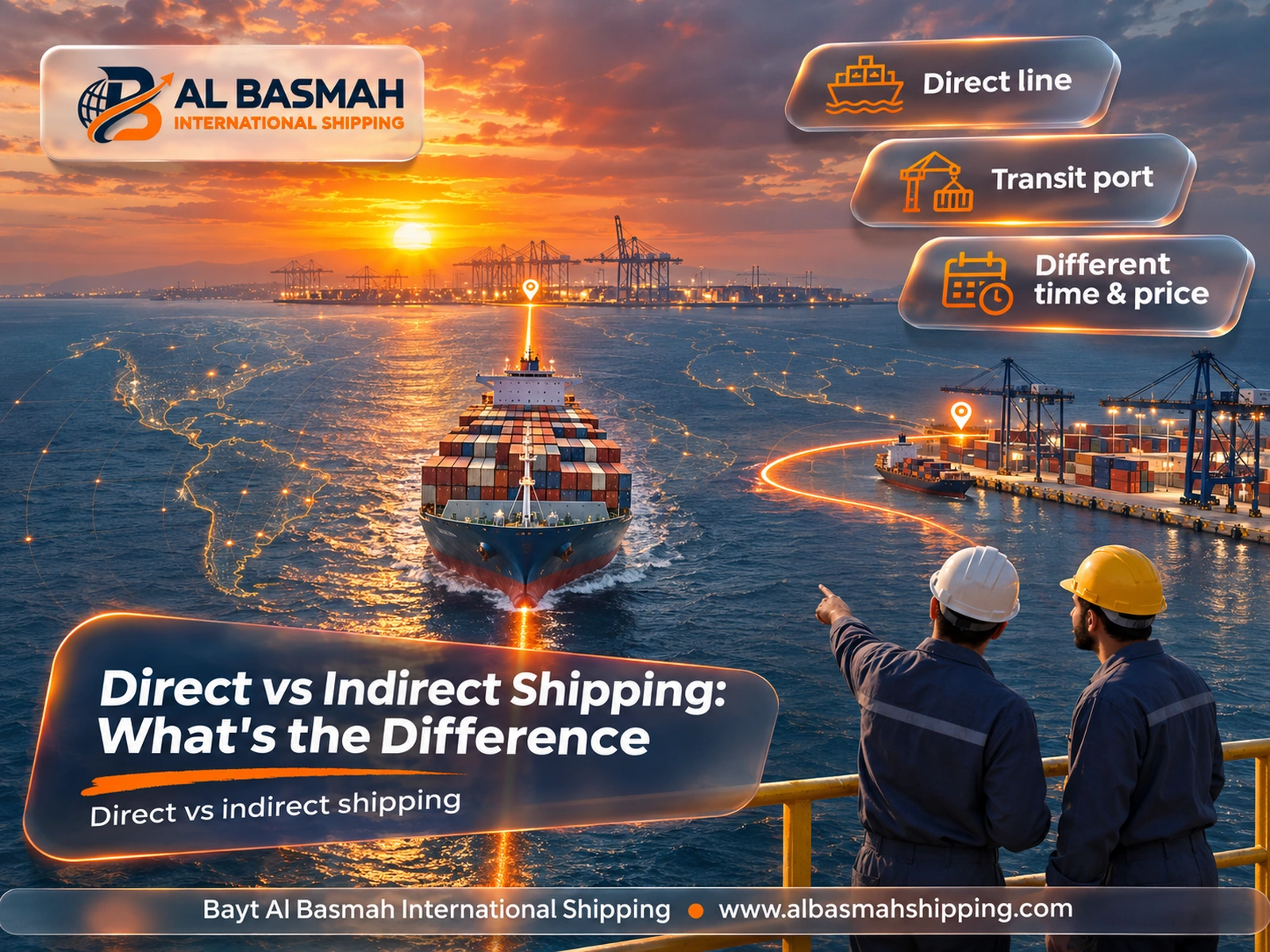
In direct shipping your goods stay on the same vehicle from origin to destination: the same ship, the same aircraft or the same truck. In indirect shipping, also called transshipment or transit, the cargo is unloaded at an intermediate port, airport or warehouse and reloaded onto another vehicle that completes the journey. Direct is faster, more predictable and involves less handling; indirect opens up far more destinations, often at a lower rate, but adds days and carries the risk of missing the onward connection. Which one suits you depends on how urgent the shipment is, what it contains and whether a direct service to your destination exists at all.
Stops in this guide13 sectionsShowHide
Direct or via a hub
- Direct: no change of vehicle, shorter transit and tighter dates.
- Indirect: unloaded and reloaded at a hub, more destinations and often a lower rate.
- A direct ship may call at other ports; what matters is that your container stays on board.
- Ask your shipper: how many transshipment points, where, and how long the connection wait is.
- Refrigerated, urgent and valuable cargo deserves a direct service whenever one exists.
A quick note: some people searching for direct shipping mean the online retail model where a supplier sends goods straight to the buyer without the seller holding stock. This guide is not about that. It is about the route your consignment physically takes: one vehicle all the way, or a change somewhere along the line.
What is a direct sea service?
A direct sea service means the vessel that loads your container at a UAE port is the same one that discharges it at the destination port. The ship may call at other ports on the way and drop off other people’s boxes; that does not change the nature of the service, because your container stays where it is on deck or in the hold.
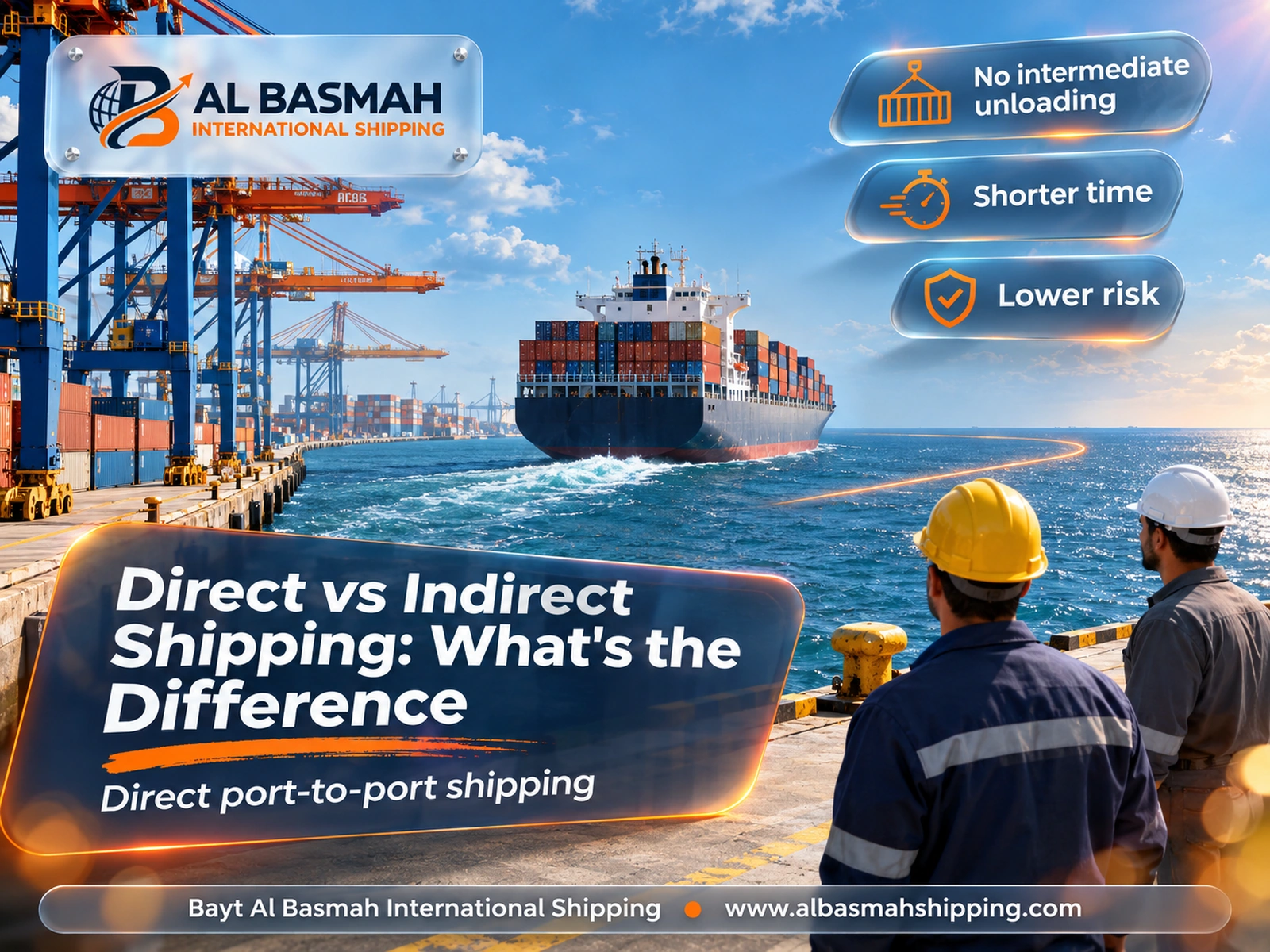
- Shorter transit, because the box never waits for a second ship.
- A clearer arrival date, as it follows one vessel’s schedule.
- Less handling: one lift on, one lift off.
- But direct services do not exist for every port, and they may sail less often.
What are indirect shipping and transshipment?
In indirect shipping your container first travels on one vessel to a hub port, where it is discharged to the terminal yard and then lifted onto another ship heading for your destination. Carriers work this way because running a direct ship between every pair of ports would not pay; instead they gather cargo at large hubs and distribute it on mainline vessels and smaller feeder ships.
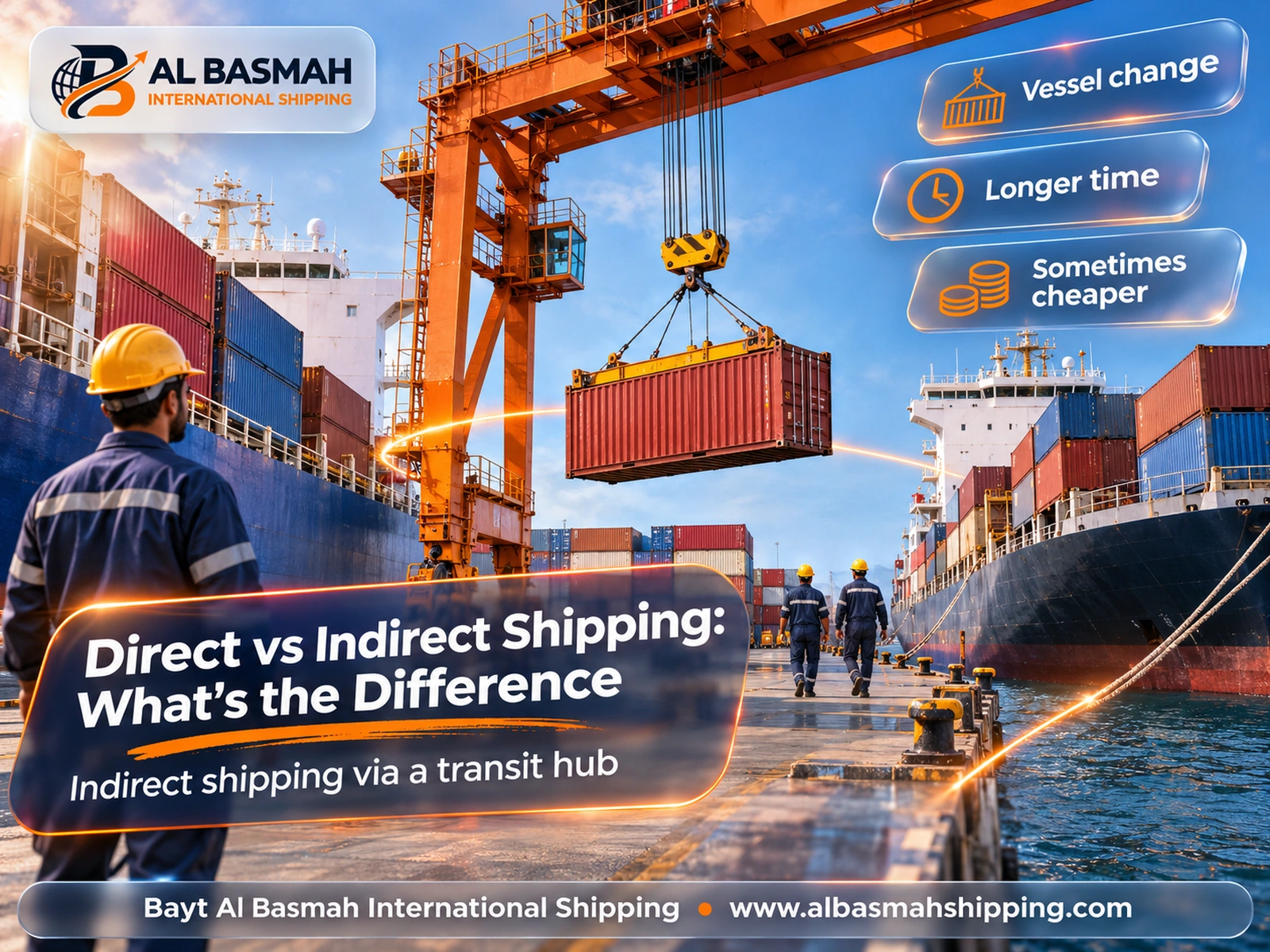
Hubs in and around the region include Jebel Ali in Dubai itself, Jeddah on the Red Sea, Salalah in Oman, Colombo in Sri Lanka, the Suez Canal ports, Singapore to the east and Tanger Med to the west. So a shipment from the UAE to an African, European or Asian country may pass through one of these before it arrives, depending on the line it was booked with.
Warning: The biggest risk in transshipment is a missed connection. If the first vessel runs late or the second one is full, your container waits at the hub for the next sailing, which can be a full week on weekly services.
How transshipment affects transit time: an example in days
The short answer: transshipment adds the days spent waiting for the connection and makes the arrival date less certain. The figures below are illustrative, to show how the sum works, not the schedule of a particular route.
| Stage | Direct service | Via a hub | If the connection is missed |
|---|---|---|---|
| Sailing to the hub | — | 5 days | 5 days |
| Waiting for the next ship | — | 4 days | 4 + 7 days |
| Sailing to destination | 9 days | 6 days | 6 days |
| Approximate total | 9 days | 15 days | 22 days |
In this example the indirect route is six days slower in normal conditions, and thirteen days slower if the connection is missed. That is why a trader waiting for seasonal stock, or a family that has booked a home, should ask about the route before booking, not after.
For the full picture of other causes of delay such as documents and clearance, see how to avoid international shipment delays.
How transshipment affects price
Indirect is cheaper on many routes, because big ships on the main lanes move a container at a lower cost and competition between lines through the hubs is stronger. But the saving on the ocean rate can disappear if the box waits a long time, or if every day of delay costs you money, like a shop waiting for seasonal goods.
| Factor | How it affects your price |
|---|---|
| Whether a direct service exists | Where only a few direct services run, they may cost more than the transshipment option |
| Number of transshipment points | Each one means extra handling and may mean charges at the hub |
| Shipment size and type | Full container or shared space, general or refrigerated |
| Season and vessel space | In peak periods rates rise and the risk of being rolled to a later ship increases |
| Shipping mode | Road for the Gulf, sea for long distance, air for urgent goods |
| Door-to-door service | Delivery and clearance at destination apply to both |
To see the difference for your own destination: send the details on WhatsApp and you will receive the price, with a note on whether the available service is direct or via a hub.
Direct and connecting air cargo
Air freight follows the same idea: a direct flight from a UAE airport to the destination airport, or a flight that lands at an intermediate airport where the cargo moves to another aircraft. A direct flight arrives within a day or two depending on distance; on a connecting route the cargo may wait for space on the onward flight, especially if the second aircraft is smaller or full.
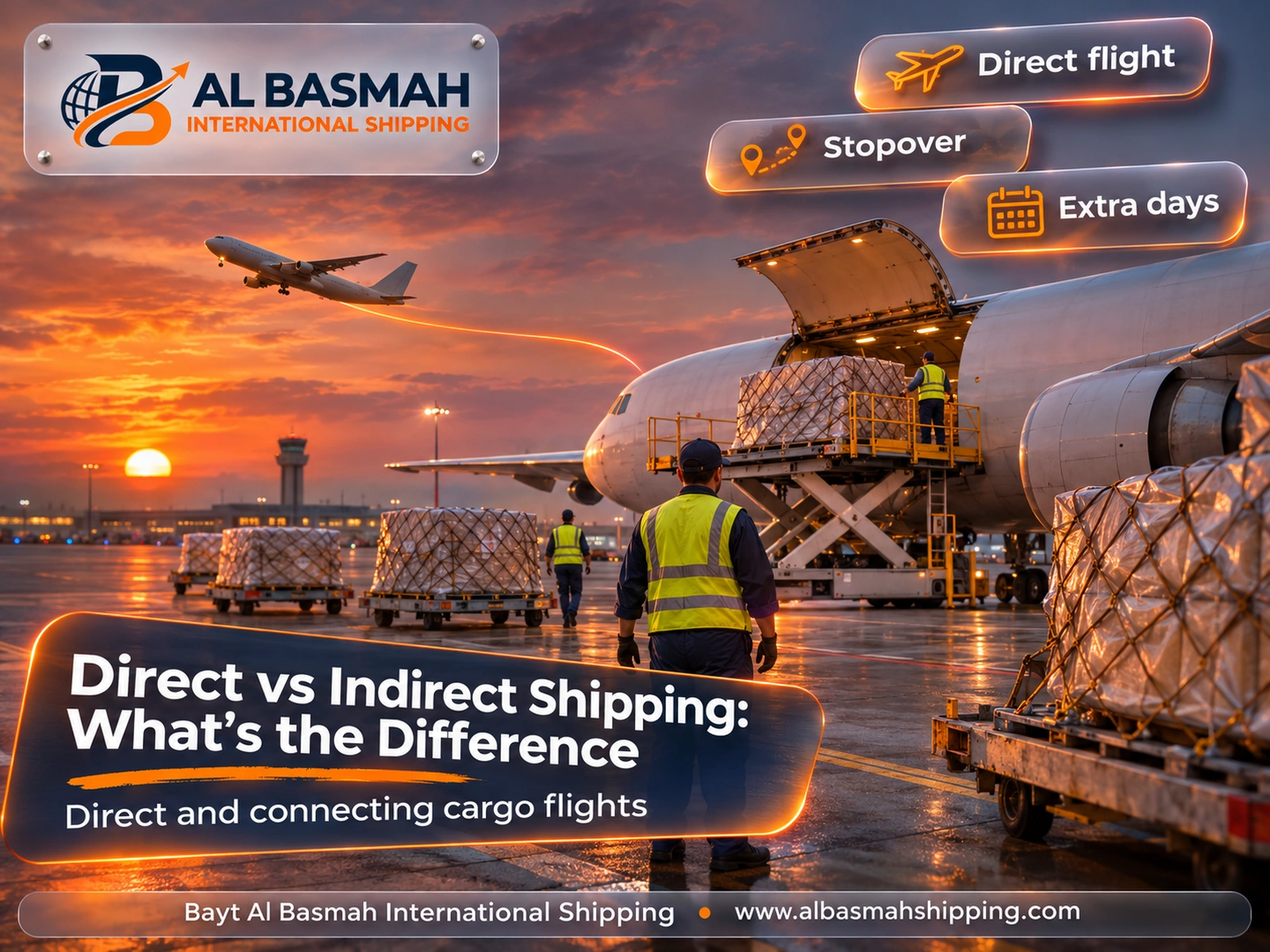
- The UAE is itself a major air hub, so many destinations have direct flights from it.
- To smaller cities the cargo may land at the nearest large airport, then continue on a smaller plane or by truck.
- Medicines, fresh food and urgent documents deserve a direct flight whenever possible.
- Both are charged on the higher of actual and volumetric weight (length × width × height in cm ÷ 6000).
Air is compared with sea and road on time and cost in air vs sea vs land freight.
Direct door-to-door road freight
To Saudi Arabia, Kuwait, Oman, Qatar, Bahrain and Jordan, road is the usual way. Direct here means a truck loaded at your home or warehouse in the UAE that crosses the border and reaches the address in the destination country without being unloaded on the way. Indirect means a truck carrying several customers’ loads that is unloaded at a distribution warehouse in the destination city, from where smaller vehicles deliver each consignment.
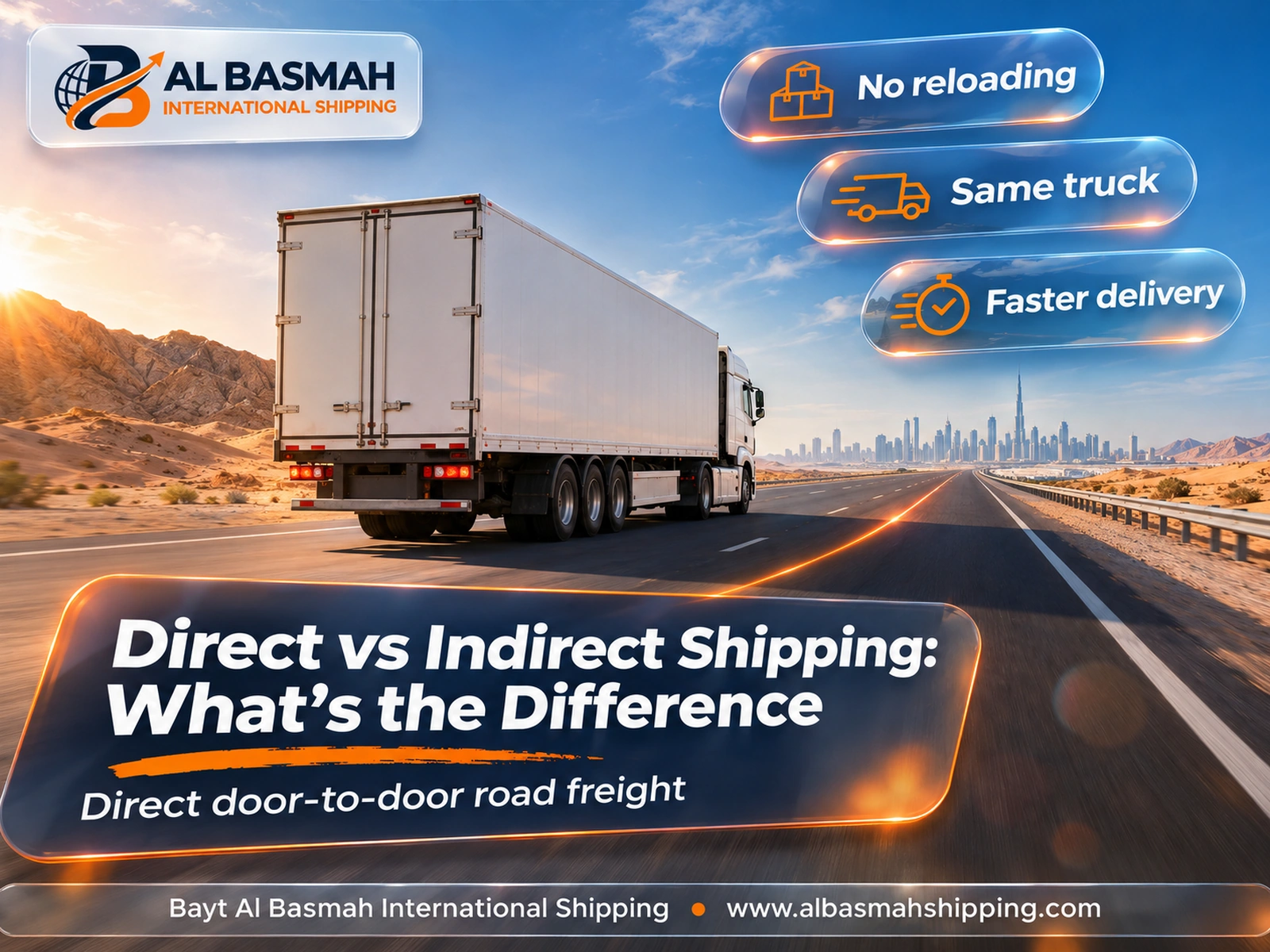
An example: a family moving villa furniture from Al Ain to Riyadh. A dedicated truck loads in the morning, crosses the border and reaches the house with no intermediate unloading, so each piece is lifted and set down only once. If the shipment were three items and ten cartons, space on a shared truck unloaded at a Riyadh warehouse and then delivered to the house would fit better. Details are on the UAE to Riyadh shipping page.
Pros and cons table: direct vs indirect
| Criterion | Direct shipping | Indirect shipping |
|---|---|---|
| Transit time | Shorter | Longer by the connection wait |
| Date reliability | Relatively high | Lower, because two legs must line up |
| Price | Can be higher on some destinations | Often lower |
| Destinations | Limited to existing services | Almost any port or airport in the world |
| Handling | Less | More, with every unload and reload |
| Damage risk | Lower | Slightly higher with each lift |
| Best for | Urgent, refrigerated, valuable, fragile | Non-urgent loads and distant destinations |
A family with a move-in date
Ask about direct first, or build the connection days into your plan.
A trader with seasonal stock
Each day late has a cost, so weigh price against time, not price alone.
A refrigerated load
Direct cuts the time the box spends in port yards.
A general load to a far country
Indirect is usually the realistic and cheaper choice.
Refrigerated and sensitive cargo: why the route matters more
A reefer container needs power for the whole journey, and at every hub it is unplugged and plugged in again. Each transfer is a point where temperature must be watched. That is why fresh food and medicines are better on the shortest route with the fewest stops. Read about international refrigerated transport from the UAE.
Documents and what transshipment means in them
An ocean bill of lading names the port of loading and the port of discharge, and a single through bill can cover the whole route even when it passes a hub. Traders paying by a bank letter of credit should watch the clause that allows or prohibits transshipment, because a mismatch can hold up payment for the goods. For personal household shipments it is enough to know the route and have your own documents ready before loading.
How to ask your shipper about the route
- Is the available service to my destination direct, or via an intermediate port or airport?
- If indirect: where is the hub, and how often do departures leave it for my destination?
- How many days for each stage, and what happens if the connection is missed?
- Is there a dearer direct option, and how many days does it save?
- How will I hear when the shipment reaches the hub and when it leaves?
Tip: do not just ask “how many days will it take?” Ask “how many days, and on which route?” A number without a route is not something you can plan on.
Common mistakes
- Thinking direct means non-stop: a direct ship may call at other ports; what counts is that your container stays aboard.
- Comparing two prices without knowing the route: the cheaper one may go through two hubs and arrive two weeks later.
- Booking a move-in or a shop opening on the shortest possible transit: leave room for a missed connection.
- Sending chilled cargo on a long multi-stop route: every stop is a temperature risk.
- Light packing for a shipment that will be transshipped: every lift is another test of the packing.
If your shipment is small and will be transshipped, also read LCL vs FCL shipping, since a shared container adds a consolidation and sorting stage on top of the hub connection.
How Al Basmah International Shipping handles the route
When you send us your destination at Al Basmah International Shipping, we pick the most suitable mode: direct road freight to Saudi Arabia, the Gulf and neighbouring countries, sea freight on the service available to a distant country, or air for urgent goods. We tell you plainly whether the route is direct or passes through a hub, and the estimated time for each stage. You then get WhatsApp updates at loading, at the hub if there is one, on arrival and on delivery. We take orders on WhatsApp around the clock, and our branches are in Dubai – Deira – Port Saeed Street and Sharjah – Industrial Area 18.
Frequently asked questions
What is the difference between direct and indirect shipping?
In direct shipping the cargo stays on the same vehicle until arrival; in indirect shipping it is unloaded at an intermediate point and reloaded onto another vehicle.
What does transit mean in shipping?
It means the shipment passes through an intermediate port or airport where it moves onto another ship or aircraft before reaching its final destination.
Is indirect shipping always cheaper?
Not always, but it is on many routes. Weigh the rate against the waiting days and what time is worth to you.
How many days does transshipment add?
It depends on the route and how often ships or flights leave the hub; it can add a few days, or a week if the connection is missed.
Does a direct ship sail without stopping?
It may call at other ports, but your container stays on board, which is why it is called a direct service.
Is road freight to Saudi Arabia direct?
It can be, with a dedicated truck door to door, or via a distribution warehouse when the shipment travels on a shared truck.
How will I know where my shipment is at the hub?
The team sends you a WhatsApp update when it reaches the hub and when it leaves, and you can ask at any time.
Which is better for refrigerated cargo?
The direct route or the one with the fewest stops, since each stop means unplugging the reefer and more time in the yard.
Know your route before you book
Send the details on WhatsApp and you will receive the price with the route, direct or via a hub, and the estimated time.
Tags: direct vs indirect shipping, transit in shipping, transshipment, hub port, direct sea service, feeder vessels, direct air cargo, connecting air cargo, door-to-door road freight, sea freight transit time, shipping from the UAE, shipping to Riyadh, international refrigerated shipping, bill of lading, Al Basmah International Shipping