

If you need a shipping company from Sharjah to Tunisia for sewing machines, workshop equipment or commercial goods, Al Basmah International Shipping collects from its branch in Industrial Area 18, Sharjah and ships to Tunisia in two ways only: by sea, in a full or shared container to the port of Sfax, Rades or Sousse, and by air to Tunis–Carthage Airport for urgent parts. There is no road route from the UAE to Tunisia. Sea transit is roughly four to six weeks port to port, plus clearance and trucking to your workshop or warehouse in Sfax’s industrial zones or any other governorate.
Stops in this guide14 sectionsShowHide
This guide is written for workshop owners and Tunisian traders in Sharjah, and for anyone setting up a business back home: how textile machines are fixed on wooden skids, which papers Tunisian customs expects for commercial cargo, when a shared container beats a full one, and how the goods reach Sfax without surprises on the quay.
The Tunisian importer’s file
- Sharjah to Tunisia is sea or air only: sea for machines, goods and cars; air for urgent parts and documents.
- Sea transit is approximate: 4–6 weeks port to port, then clearance and inland trucking.
- Commercial cargo needs a registered importer in Tunisia, a commercial invoice, a packing list and a certificate of origin.
- Machines are fixed on heat-treated wooden skids; goods are stacked on wrapped pallets.
- We collect at Industrial Area 18 or from your site once the shipment and its papers are checked.
- Pricing is based on your shipment: send the details on WhatsApp and you will get the price.
What we ship from Sharjah to Tunisia
We ship anything Tunisia allows to be imported: light industrial machines and equipment, palletised commercial goods, household furniture for returning families, and cars once their eligibility is confirmed. What sets Sharjah requests apart is the industrial and trading side, because the emirate is full of workshops, warehouses and wholesale markets.
- Sewing and textile machines: industrial lockstitch machines, overlockers, multi-head embroidery machines, steam presses, cutting machines and spreading tables.
- Workshop equipment: air compressors, small generators, hand and power tools, mechanical spare parts, steel shelving.
- Commercial goods: fabric rolls, thread, sewing accessories, ready-made garments, household goods, car parts, packaging materials.
- Personal effects and furniture: for those going home for good with household items alongside work equipment.
- Cars: after Tunisia’s import conditions are checked before booking.
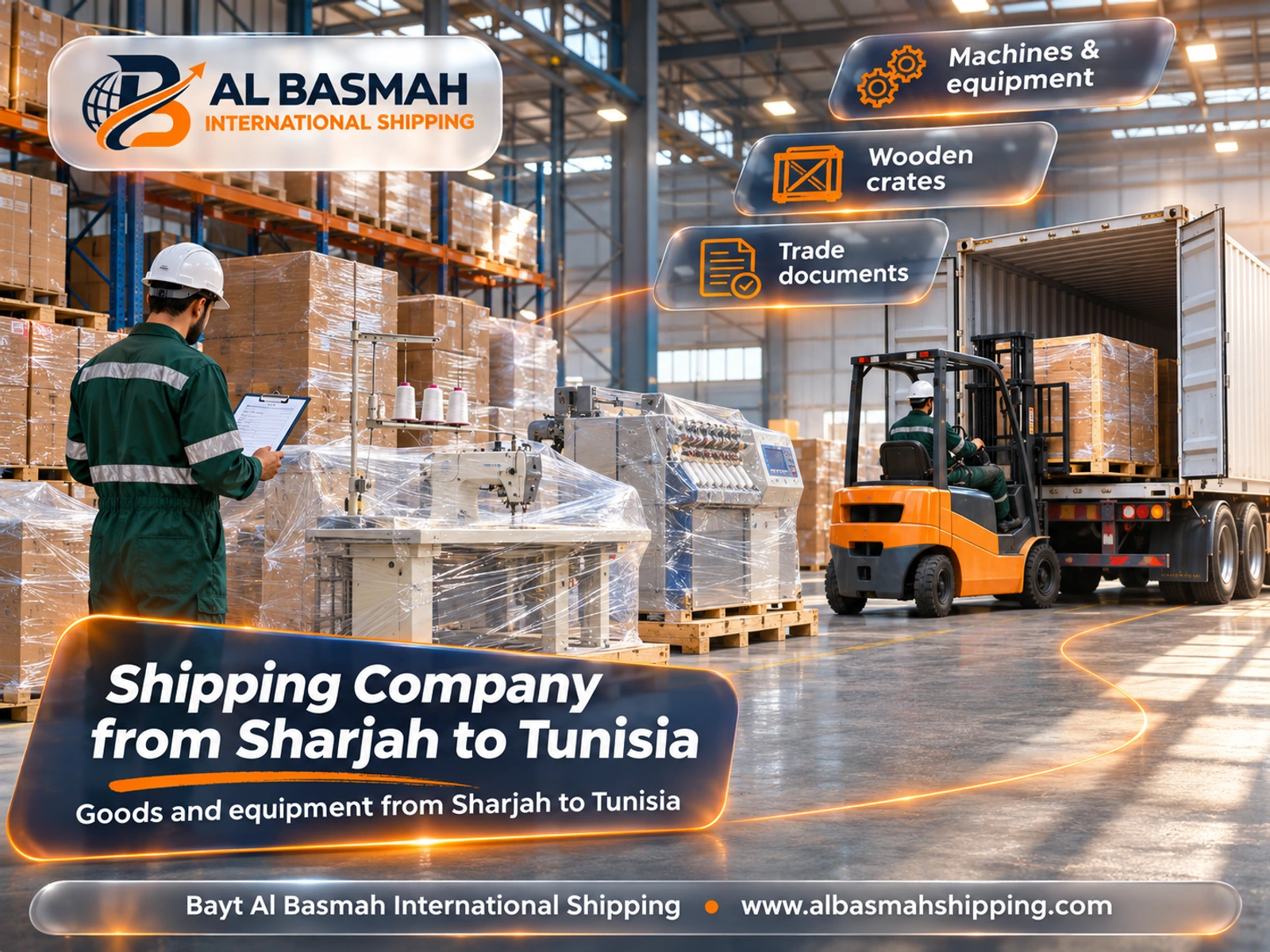
Many Tunisian craftsmen who worked for years in Sharjah’s workshops want to open their own place in Sfax or Monastir, so they pack machines, fabric and furniture into one container. That works, but customs treats personal effects, professional equipment and commercial goods under different rules, so we split the load list into clear sections from day one.
Collection areas in Sharjah
We receive goods at our Industrial Area 18 branch: you can drop them off or we send the team to you. On-site pickups happen after we have checked the type of goods, the paperwork and that the items are allowed into Tunisia, so a container is never loaded only to stall at the port.
Industrial areas
Industrial Areas 1 to 18, Al Sajaa and the newer industrial zones, the main source of machines and equipment.
Free zones
Sharjah Airport International Free Zone (SAIF Zone) and Hamriyah Free Zone, with the free-zone exit papers handled first.
Residential areas
Al Nahda, Al Taawun, Al Majaz, Al Khan, Al Qasimia, Muwaileh and Al Yasmeen, for household items shipped with equipment.
Wholesale markets
Fabric shops and goods warehouses in and around Sharjah, with pickups from several suppliers merged into one shipment.
If you are buying from more than one supplier, send us the addresses and pickup times. We gather everything at our warehouse and match it against the invoices before loading. That step saves a lot of trouble, because any item missing from the invoice delays clearance in Tunisia.
The sea route from Sharjah to Tunisia
Sharjah to Tunisia is a sea route; there is no road option. The container leaves from Khalid Port in Sharjah or Khor Fakkan, or from Jebel Ali or Khalifa Port depending on the nearest available sailing, then crosses the Red Sea and the Suez Canal into the Mediterranean. It often calls at a transhipment port, where it is moved to another vessel before reaching Tunisia.
- Port of Sfax: best when delivery is in Sfax, its industrial zones or the centre-south.
- Port of Rades: the main container port, serving Greater Tunis, Ariana and Ben Arous.
- Port of Sousse: serves the Sahel: Sousse, Monastir and Mahdia.
- Port of Bizerte: for the north and some services depending on the line.
We choose the arrival port based on the delivery address and the available service. If your workshop is in Sfax, arriving straight into Sfax saves a long truck run from Rades. Sometimes the Rades sailing is faster or cheaper, so we compare both and let you decide.
Transit time by shipping method
The times below are approximate and depend on vessel schedules, transhipment and how quickly clearance goes.
| Method | Approximate time | Best for | Notes |
|---|---|---|---|
| Full container (FCL) 20ft or 40ft | 4–6 weeks port to port + clearance | A whole workshop, a trader’s stock, a full household | Sealed for you alone, with the least handling for heavy machines |
| Shared container (LCL) | About 5–7 weeks including consolidation and unpacking | A few pallets or two or three machines | Charged per cubic metre and unpacked at a port warehouse before collection |
| Air freight | About 3–5 days door to door including clearance | Urgent spare parts, fabric samples, documents | Charged on actual or volumetric weight, whichever is higher |
Air freight from Sharjah to Tunisia
Air freight from Sharjah to Tunisia is for things that cannot wait: a control board for an embroidery machine that has stopped, a replacement sewing head, fabric samples for a customer in Sfax, or original documents the importer needs for clearance. It flies from Sharjah, Dubai or Abu Dhabi airport to Tunis–Carthage International Airport, and can be routed to Monastir, Djerba or Enfidha depending on flights. It usually takes three to five days door to door including clearance.
The chargeable weight is the higher of the actual weight and the volumetric weight, which is length × width × height in centimetres ÷ 6000. A 60×40×40 cm box of spare parts has a volumetric weight of about 16 kg even if it weighs 9 kg on the scale. That is why air does not suit whole machines or furniture.

Note: Loose lithium batteries, liquids, perfumes and machine oils are restricted on air freight. If a part contains a battery or oil, tell us before booking so we can confirm whether it can fly or should go by sea.
Packing machines and goods for Tunisia
A machine that arrives with a broken base or a bent shaft means a workshop standing idle for weeks, so packing gets the time it needs.
- Draining oil: we empty and wipe the oil sump of industrial sewing machines so nothing leaks onto other cargo.
- Securing moving parts: the machine head, needle bar and pedal are fixed, and the motor is removed if it sticks out under the table.
- Wooden skid: large embroidery machines and presses are bolted and strapped to a skid made of heat-treated wood carrying the ISPM-15 mark, since Tunisia applies that standard to wood packaging.
- Moisture protection: plastic wrap and desiccant bags, because the container goes through Red Sea heat and then Mediterranean humidity.
- Pallets: cartons and fabric are stacked on pallets, stretch-wrapped and numbered, and each pallet number matches the packing list.
- Loading: heavy items low and against the front wall of the container, then the pallets, with straps and bracing so nothing shifts.
Photograph every machine and its serial number before packing. The photo and the serial make it easy to match the invoice during customs inspection, and they protect you if any damage shows up.
Required documents
Paperwork depends on the type of shipment, and what holds goods up most in Tunisia is an incomplete invoice or a vague description.
Commercial goods and equipment
- A registered importer in Tunisia: a company or trader with a tax ID and a customs number; commercial goods cannot be cleared in the name of an unregistered individual.
- Commercial invoice: with items, quantities and values, and a precise description of each machine (brand, model, new or used).
- Packing list: each pallet number, its contents and weight.
- Certificate of origin: stating the country of manufacture. Goods of Arab origin may benefit from the Greater Arab Free Trade Area terms where their conditions are met.
- Bill of lading: issued when the container is loaded.
- Some products need technical conformity or prior approval in Tunisia; the team checks the item list before booking.
Imported goods pay customs duty according to their tariff line, and Tunisian VAT at the standard 19% rate, with reduced rates for some items. We do not set the duty for you, but we prepare the papers so the clearing agent in Tunisia can assess it without dispute.
Personal effects for returning Tunisians
A Tunisian living abroad who returns for good can usually bring in used household goods duty-free once, under the definitive-return procedure, with consulate papers proving residence abroad, a detailed contents list, and within a set period from the return date. Foreign residents in Tunisia follow different rules. The team reviews your case before loading.
Cars
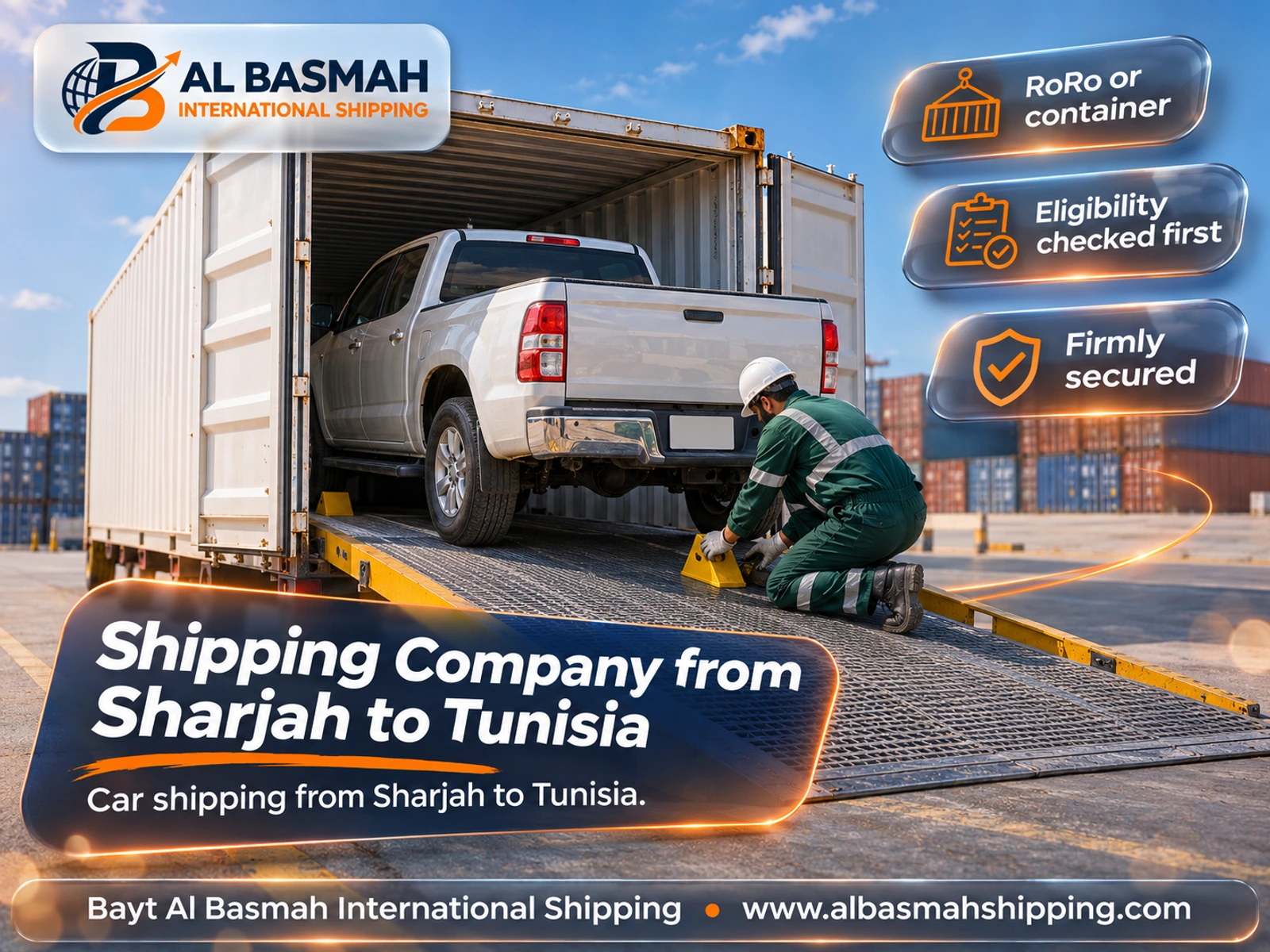
Car imports into Tunisia follow precise rules. Tunisians living abroad have a special scheme known as FCR, which reduces duties under conditions that usually include at least two years of residence abroad, a car no older than about five years from first registration, and use once every ten years. These conditions can change, so we check your situation before booking. The car goes on a RoRo vessel, where it is driven aboard, or inside a container.
Prohibited and restricted items
- Narcotics of any kind, and weapons, ammunition and their parts.
- Counterfeit goods and items with fake brand marks, which comes up often with fabric and clothing, so check your source.
- Drones and some wireless and electronic devices need prior authorisation.
- Medicines in certain quantities or categories need a permit.
- Flammable materials and compressed gases, such as fuel cans and spray paint, are not shipped with general cargo.
Shipping prices from Sharjah to Tunisia
The price from Sharjah to Tunisia is worked out on your actual shipment: its volume, weight, type, arrival port and the governorate where it is delivered. One embroidery machine on a skid is charged per cubic metre in a shared container, while a full workshop may need a 40ft container. Send the details on WhatsApp and you will get the price; photos of the goods and a rough item list help.
What decides the price?
| Factor | How it affects the price |
|---|---|
| Sea FCL, sea LCL or air | FCL is one price for the whole container, LCL is per cubic metre, air is per actual or volumetric kilogram |
| Container size | 20ft for a small workshop, 40ft for large stock or furniture with machines |
| Volume and weight | Heavy machines may need a skid and a forklift, which is factored in |
| Arrival port and city | Sfax, Rades or Sousse, then the truck distance to your workshop |
| Packing | Heat-treated wooden skids, pallets and moisture protection |
| Documents | Invoice, packing list, certificate of origin and clearance in Tunisia |
| Car | Type and size, RoRo or container, and the import scheme that applies |
How to ship from Sharjah to Tunisia, step by step
- Send the details on WhatsApp: photos of the machines and goods, rough sizes, and the delivery city.
- Eligibility check: we review the items and the importer’s name in Tunisia, and tell you if anything needs a permit.
- Price and method: we suggest full, shared or air and send the price.
- Collection: at the Industrial Area 18 branch or from your site once confirmed.
- Packing and inventory: machines fixed on skids, pallets stacked, and the packing list matched against the invoice.
- Loading and sailing: we send you the bill of lading and loading photos.
- WhatsApp updates: the team updates you at sailing, transhipment and arrival.
- Clearance and delivery: after clearance the goods are trucked to your workshop or warehouse.
Tips and warnings for traders and workshop owners
- Do not put another trader’s goods in your container under your name; everything inside is your responsibility before customs.
- State on the invoice if a machine is used, because used machinery may fall under different conditions.
- Keep copies of the original purchase invoices for the machines; they help with valuation.
- Do not pack cash or important original documents in the container; send documents by air.
- Arrange unloading in Sfax before arrival: a forklift or workers to bring heavy machines down.
Note: If your goods sit in a Sharjah free zone, do not move them out before the exit papers are ready, or they will be held at the gate and the loading date will slip.
Delivery in Tunisia: Sfax and the other governorates
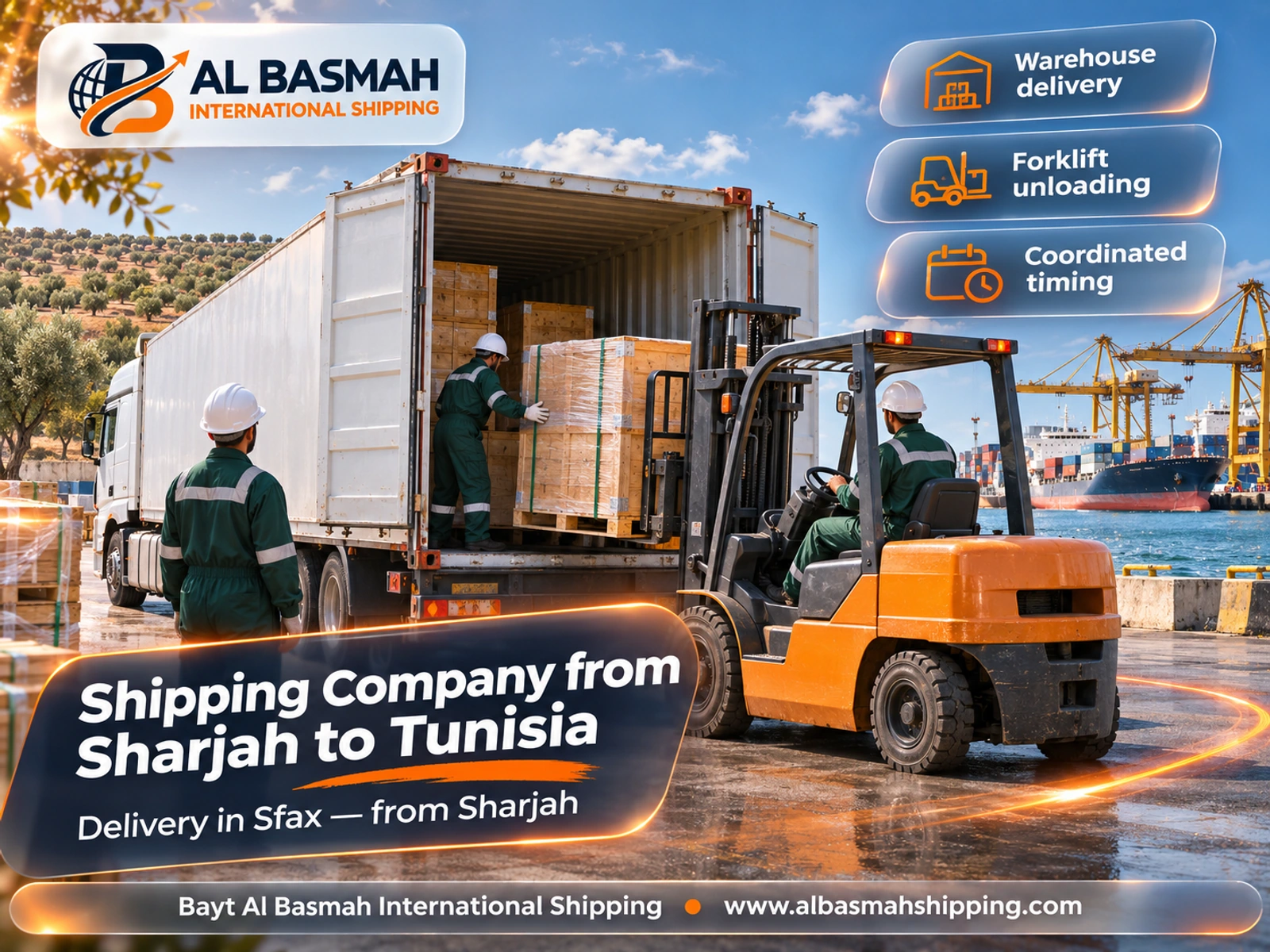
After clearance the goods are trucked to the address. In Sfax we deliver to industrial areas such as the Oued Chaabouni zone and the zones along the Gabes, Mahdia and Tunis roads, to Thyna, and to neighbourhoods across the city. If your place is inside the old medina of Sfax, Sousse or Tunis, trucks cannot enter the narrow lanes, so the load is switched to a small vehicle or carried by hand for the last stretch.
| Governorate / area | Usual arrival port | Note |
|---|---|---|
| Tunis, Ariana and Ben Arous | Rades | Closest to Greater Tunis, with a short truck run |
| Sousse and Monastir | Sousse or Rades | Depends on the available line |
| Sfax | Sfax | Direct arrival for the industrial zones; otherwise trucked from Rades |
| Nabeul and Hammamet | Rades | Relatively short road leg |
| Bizerte | Bizerte or Rades | Depends on the sailing |
| Djerba and Gabes | Sfax or Gabes | For the south, with trucking |
The practical difference between Rades and Sfax: Rades usually has more sailings, while Sfax saves you roughly 270 km of trucking if your workshop is there. If you are returning for good, make sure your definitive-return papers are ready before the container arrives, because a container left at the port without papers runs up storage charges.
If your goods leave from another emirate, see shipping from Dubai to Tunisia or shipping from Ajman to Tunisia, and for the full picture there is the UAE to Tunisia shipping guide. If you also ship to North Africa, see shipping from Sharjah to Morocco.
Frequently asked questions
How long does sea shipping from Sharjah to Tunisia take?
About four to six weeks port to port for a full container, a little longer for a shared container because of consolidation and unpacking, plus clearance and delivery to the governorate. Times are approximate and depend on vessels and transhipment.
Can I ship by road from Sharjah to Tunisia?
No. Shipping from the UAE to Tunisia is by sea or air only. Sea is for machines, goods, furniture and cars; air is for urgent parts and documents.
Can I ship used sewing machines to Tunisia?
Usually yes, provided they are listed on the invoice as used with brand and model, and imported through a registered importer if they are for business. Some used equipment may face specific conditions, and the team checks this before booking.
Do I need a business registration in Tunisia to import goods?
Commercial goods are cleared in the name of an importer registered with Tunisian customs. If you are not registered, the goods can be shipped in the name of a Tunisian company you work with, with the invoice in its name.
Do you collect from Sharjah free zones?
Yes, from SAIF Zone, Hamriyah and others, once the free-zone exit papers are ready and the items are checked.
Which arrival port is best for Sfax?
The port of Sfax itself if it is on the available line, which shortens the road leg. If the Rades sailing is faster or cheaper, the goods land at Rades and are trucked to Sfax.
How do I know where my shipment is?
The team sends you a WhatsApp update at every stage: collection, loading, sailing, transhipment, arrival, then clearance and delivery.
Can the machines be insured during shipping?
Ask the team about optional insurance when you request the price, and send the machines’ values from the invoices.
Ready to ship your workshop or goods to Tunisia?
Send photos of the machines and items with the delivery city, and we will reply with the best method and the price.
Tags: shipping company from Sharjah to Tunisia, Sharjah to Tunisia shipping, sewing machines to Tunisia, equipment shipping to Tunisia, commercial goods to Tunisia, shipping to Sfax, LCL to Tunisia, FCL to Tunisia, sea freight to Tunisia, air freight to Tunisia, Rades port, Sfax port, car shipping to Tunisia, FCR scheme, definitive return Tunisia, Industrial Area 18 Sharjah, Al Basmah International Shipping